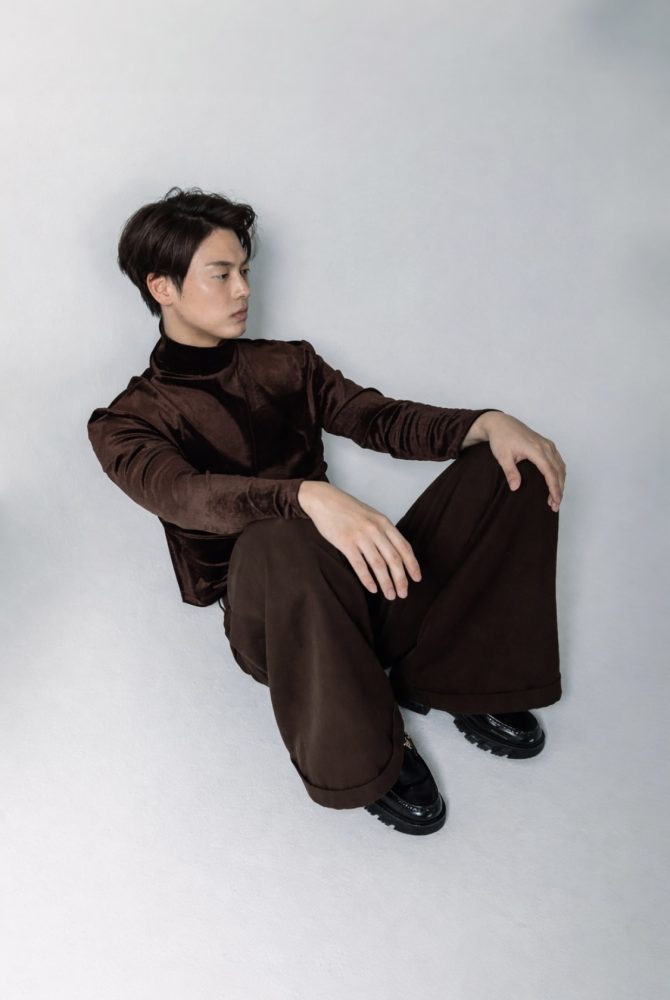

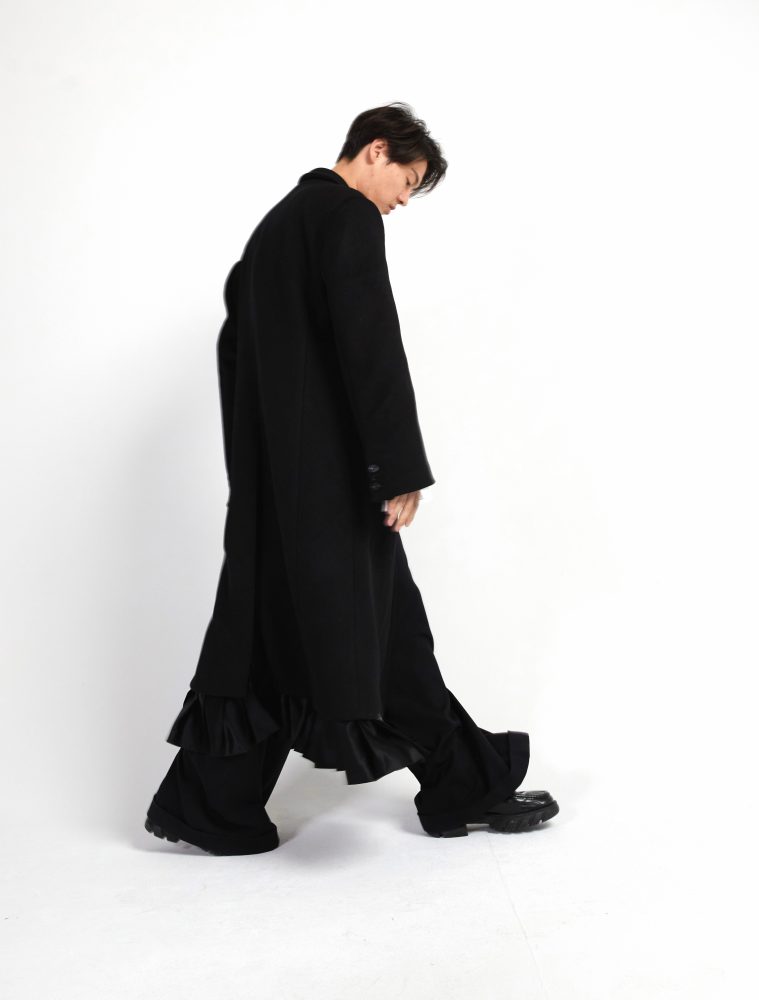

Launched in 2024 by its founder and namesake, Wàngda is rooted not in hype but in philosophy; a quiet, expansive vision of fashion as hope, energy, and emotional architecture.
The name Wàngda carries deep personal meaning. Given by the designer’s grandfather, Wàngda translates in Chinese to a hope for the best possible outcome, a wish for peace, harmony, and a better world. That intention became the foundation of the brand itself: hope for the fashion industry, hope for humanity, hope for what comes next.
There’s also a subtle mystery embedded in the name. The letter “G” in Wàngda is silent, unspoken, unseen. For the designer, this “ghost G” represents the intangible forces that shape our lives: soul, spirit, love, energy. “You can’t touch them,” the designer explains, “but you can feel them.” That philosophy echoes through every piece, garments designed not just to be worn, but to be felt.
-

- Talented Wangda
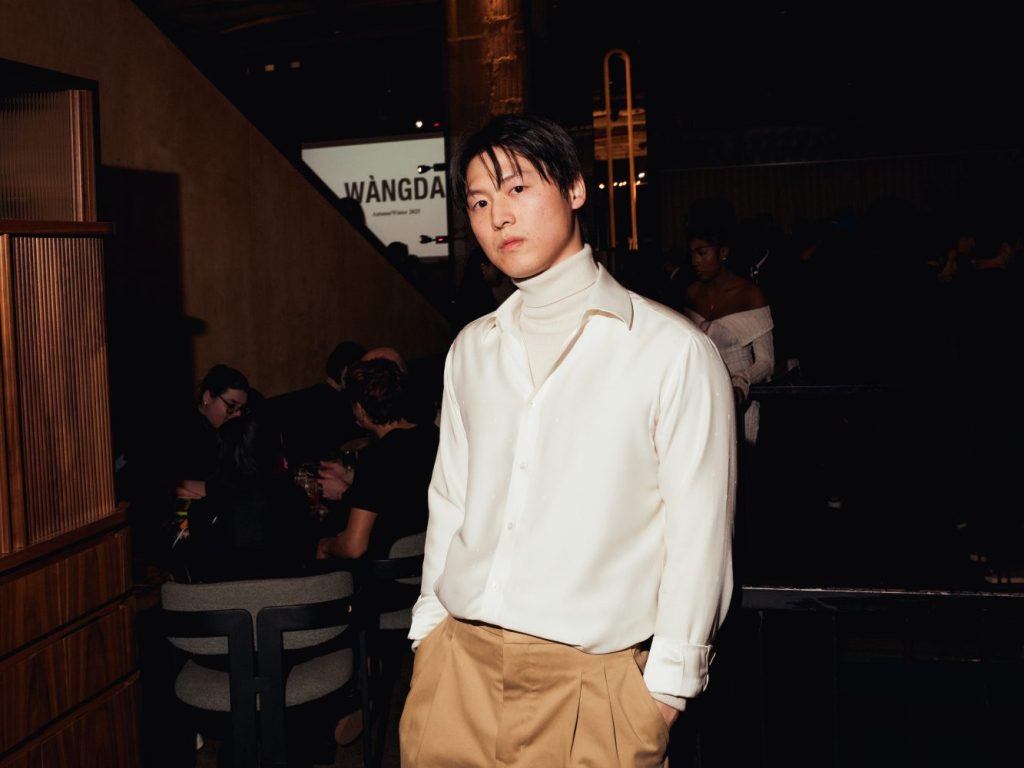
At first glance, Wàngda ’s aesthetic might be described as minimalist, but that label barely scratches the surface. Rather than stripping things down, Wàngda uses minimalism as a starting point, a framework for pushing proportion, construction, and silhouette beyond convention.
Drawing inspiration from art, music, and architecture, the brand approaches clothing as spatial design. Shapes are oversized, volumes exaggerated, proportions intentionally distorted. The human body is not a limitation, but a canvas. “I don’t want to be confined by the human form,” the designer says. “I want to exaggerate it, to dance between art and function.”
Each piece is meticulously constructed, emphasizing structure as much as emotion. Seams, volumes, and balance are deliberate. The result is clothing that feels architectural yet fluid, garments that exist in conversation with the body rather than simply dressing it.
Though Wàngda is based in New York, its perspective is inherently global. The designer was born and educated in China, and that duality, East and West, tradition and futurism, informs the brand’s worldview.
“I believe borders are limitations,” the designer says. “Cities, countries, even Earth can feel like a limitation.” Fashion becomes a way to transcend those boundaries, to communicate beyond language or geography. Inspiration comes from everywhere: films, music, nature, people, silence, chaos. Creation, for Wàngda, is as instinctive as breathing.
This expansive mindset is central to the brand’s ethos. Wàngda doesn’t design for a single city or scene; it designs for a connected world, one where imagination travels faster than geography.
Starting Wàngda wasn’t a strategic career move; it was a necessity. The designer felt unable to fit into predetermined paths, whether within a family business or a traditional job structure. “I couldn’t be put in a box,” they explain. “I had to go against the grain.” Launching the brand became an act of self-definition, a refusal to compromise vision for convention. Wàngda is not just a label, but a vessel for sharing ideas about art, culture, and hope. It is deeply personal, yet intentionally open. fashion centers. In a digital world, the designer notes, everyone has access to inspiration. “We all carry the universe in our pocket.”
Wàngda speaks to those who seek something deeper than trend cycles, those drawn to clothing that carries meaning, intention, and quiet power.At its core, Wàngda is a brand about belief, belief in fashion as a force for connection, belief in creativity without borders, belief in hope as a design principle. In an era of constant noise, Wàngda offers something rare: space, silence, and sincerity.