

VENICE ART BIENNALE DIARY
with Artist Jenny Sharf
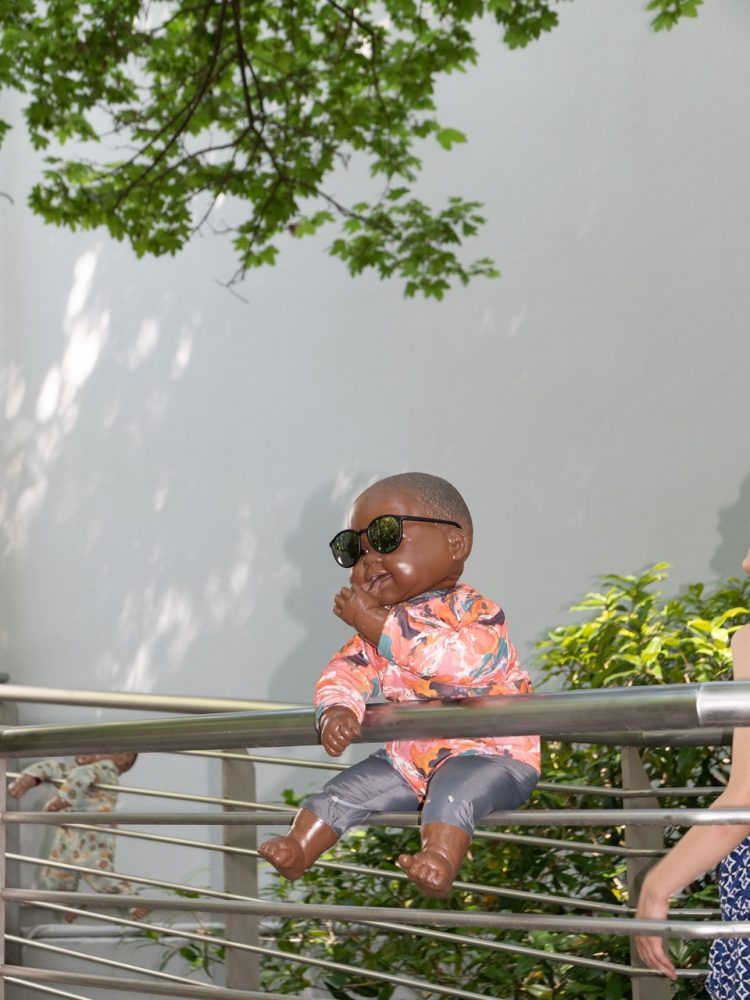
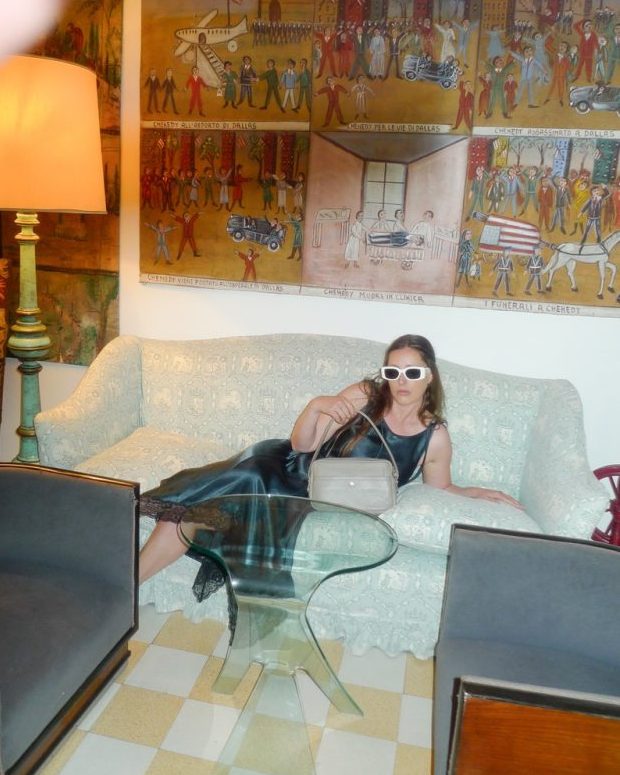
Last week, Venice felt like the center of the world. Between the art elite and an influx of international creatives, the stage that is the Venice Biennale felt complicated, to say the least. The press preview and opening spectacle were less sparkly and obnoxious than in years past, and more attuned to global politics and the immediacy of our shared humanity. Much of the work leaned away from object and identity, honing instead on a prevailing sense of unease. The week’s events were punctuated by feminist protest and conceptual performance art collective, Pussy Riot and demonstrations against the Israeli actions in Palestine.
Of course, there were still parties and dinners — even a DJ set by Björk. And the presence of brand-backed art foundations — Prada, Dries Van Noten, Fiorucci, among others — offered a genuine sense of optimism, positioning culture not as an accessory, but as a priority.
I left Venice with the always-welcome reminder that art is necessary. In case anyone forgot: artist voices are crucial right now.
-

- Venice Biennale Photographed by Jenny Sharaf
-
- Venice Biennale Photographed by Jenny Sharaf
-
- Venice Biennale Photographed by Jenny Sharaf
-
- Venice Biennale Photographed by Jenny Sharaf
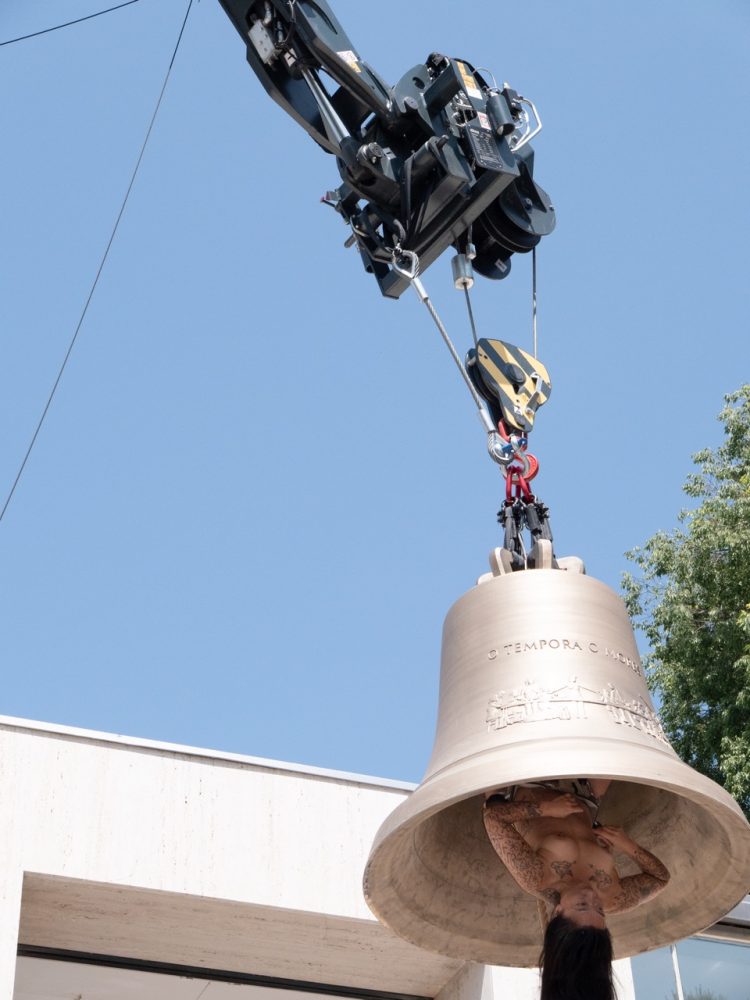
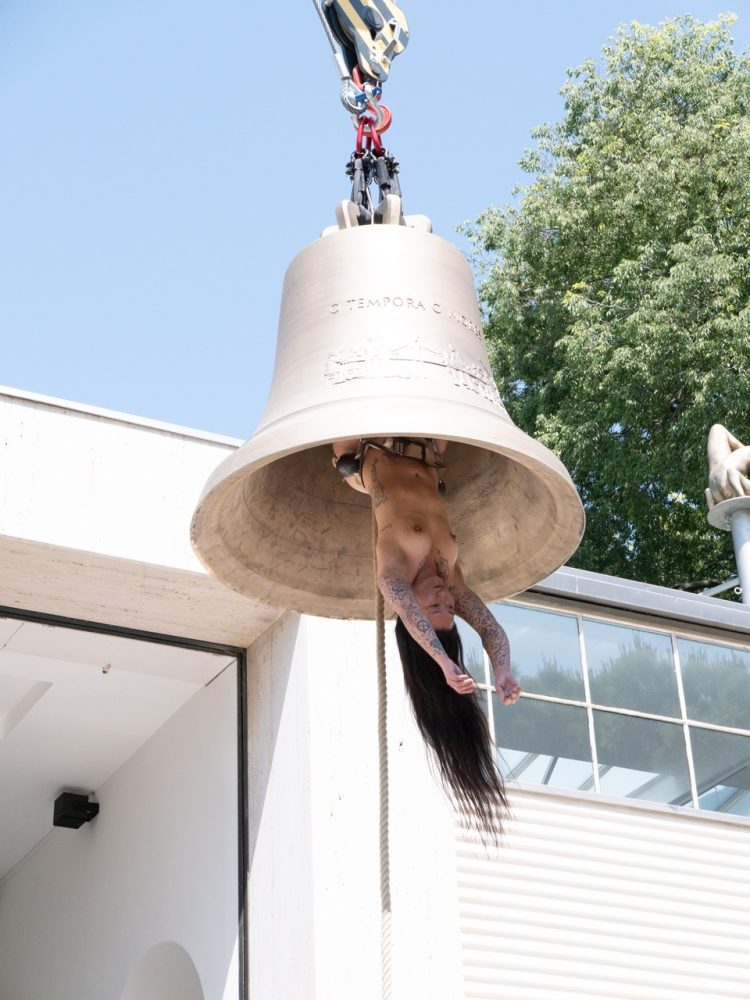
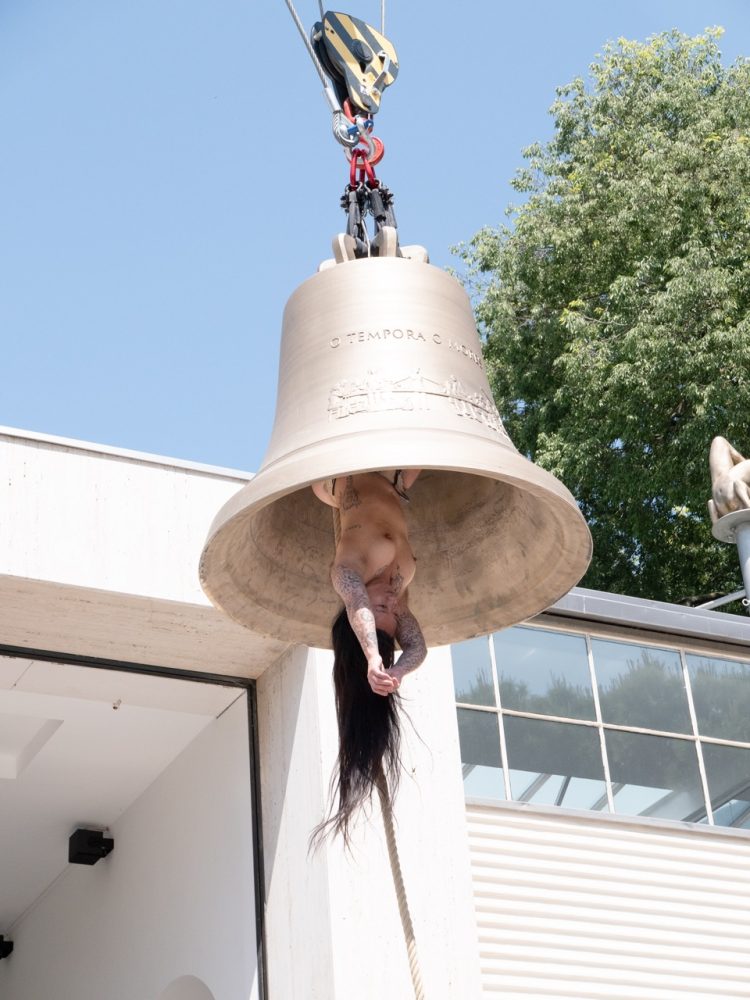
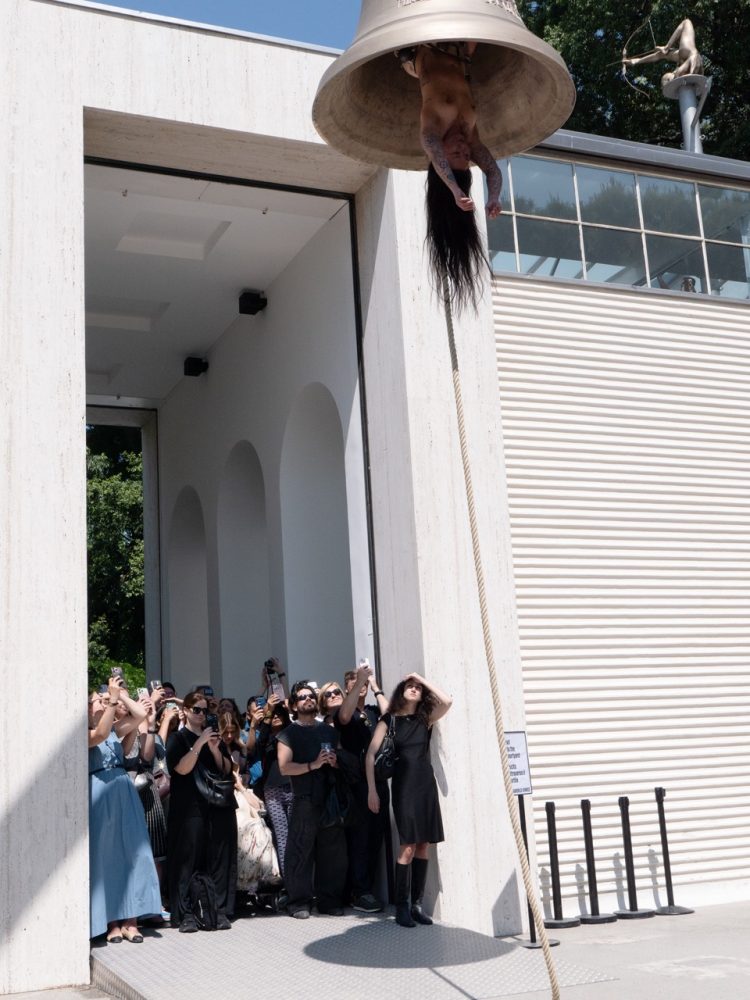
The winner of the week, despite the Golden Award being cancelled, is clearly Austrian Pavilion. The performance was not only going viral on socials, but in person the crowd hushed into a heavy silence and the work was heavy and powerful. If you could get through the long wait, the performances surely will be with you for a lifetime. You’ve seen the videos. You’ve read the articles.
-

- Venice Biennale Photographed by Jenny Sharaf
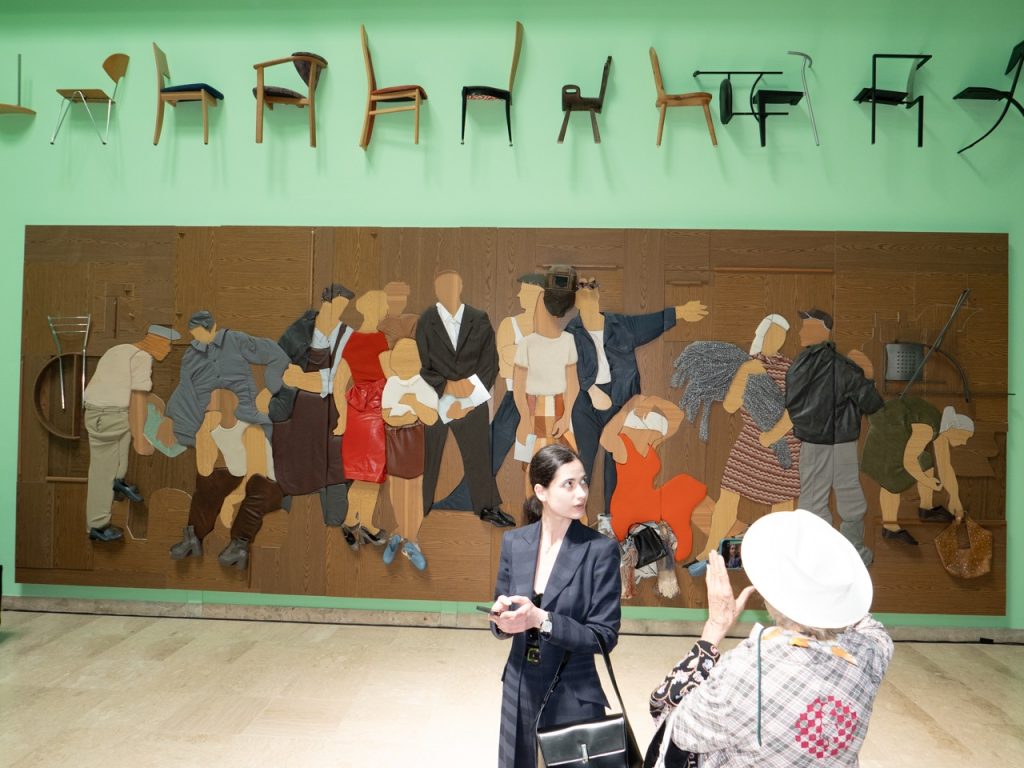
Sung Tieu and Henrike Naumann and the German Pavilion.
-

- Venice Biennale Photographed by Jenny Sharaf
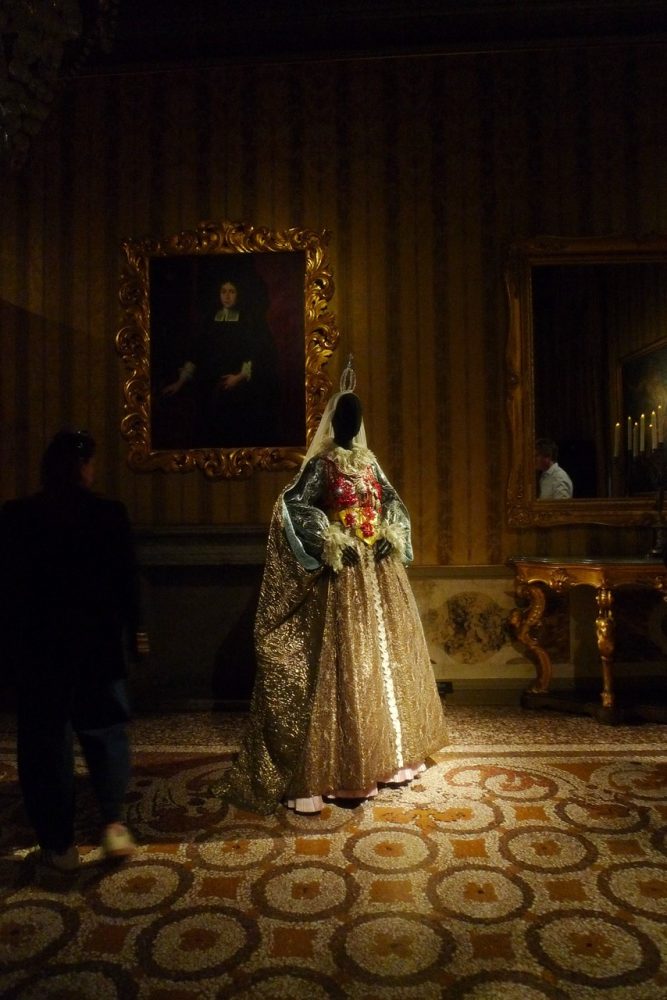
Inaugural curated exhibition, ‘The Only True Protest Is Beauty’, at the Dries Van Noten Foundation. which occupies a landmark Pavilion. Beyond gorgeous coming together of fashion and art. Curated by Dries himself, alongside Geert Bruloot. Overheard that the historic Palazzo cost $35 million, but never verified.
-

- Venice Biennale Photographed by Jenny Sharaf
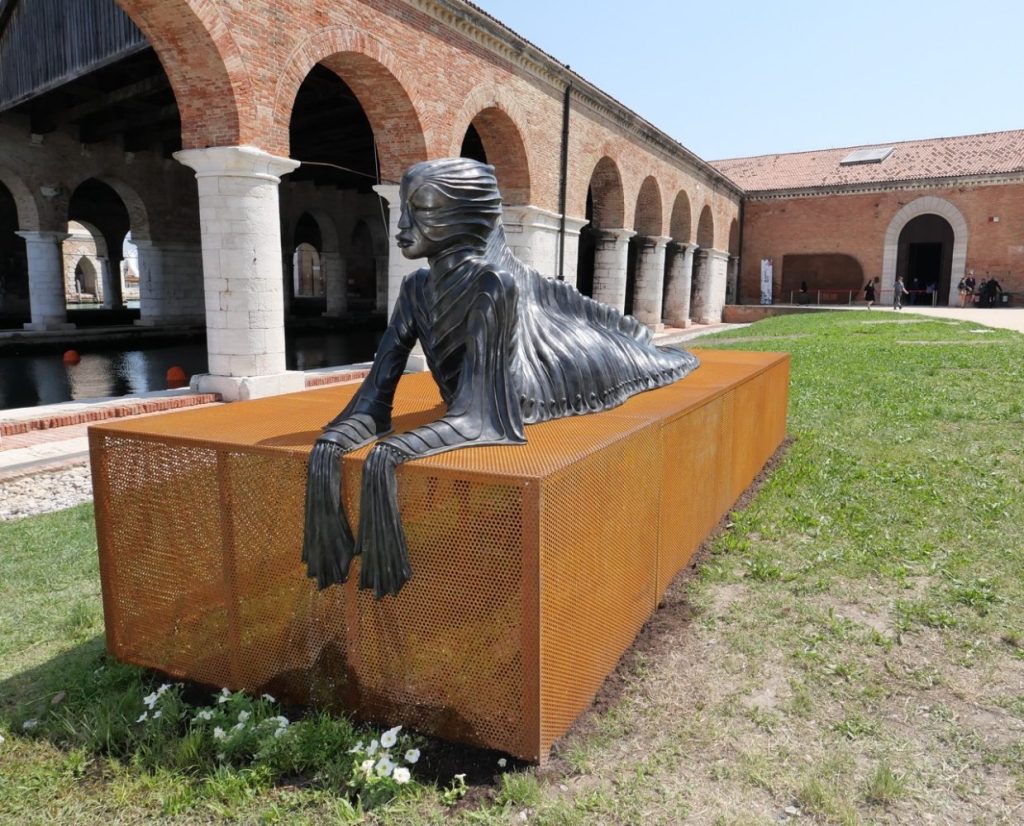
Bronze Sculpture by Wenguci Wangechi Mutu at the Arsenale.
-
- Venice Biennale Photographed by Jenny Sharaf
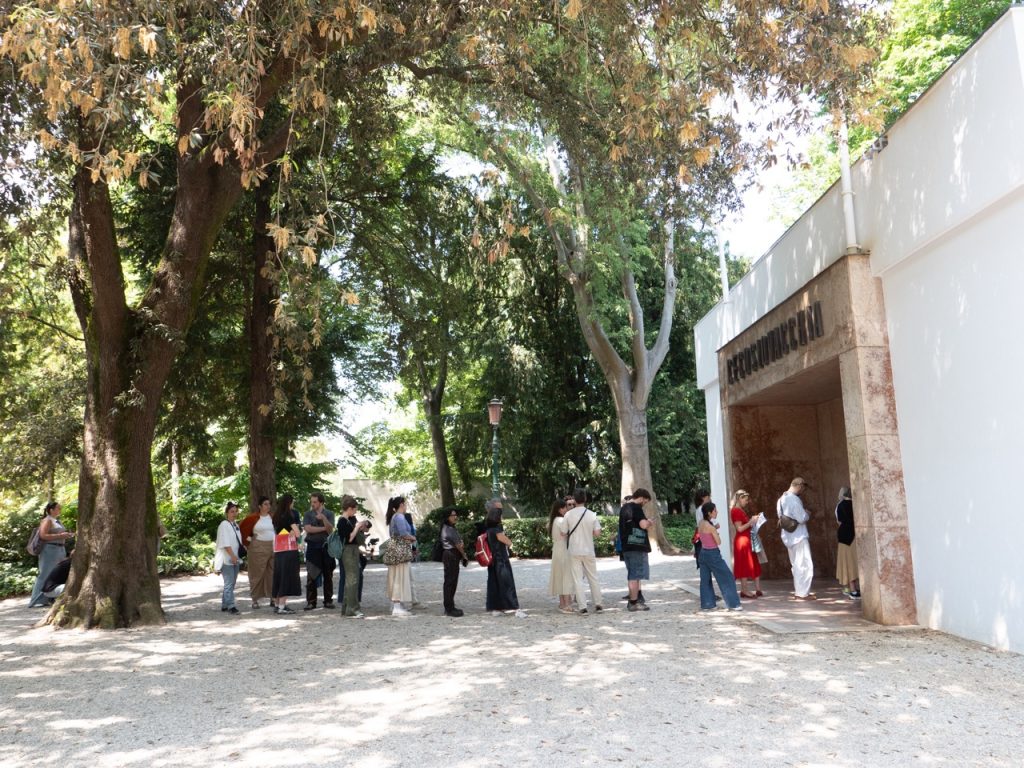
Long lines defined the week’s activities. If you weren’t making friends, while waiting, you were definitely doing it wrong. Many of the pavilion cues were two hours long. And press day was busier than the first day open to the public.
-
- Venice Biennale Photographed by Jenny Sharaf
-
- Venice Biennale Photographed by Jenny Sharaf
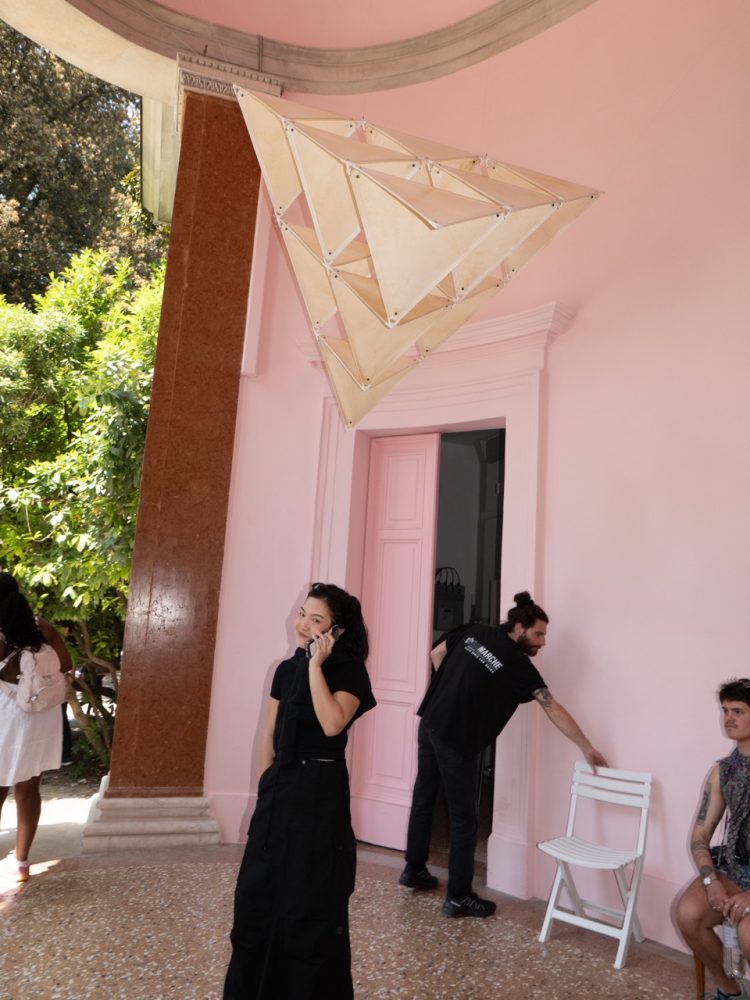
French girls being cute at the French Pavilion. Exhibition featured Artist Yto Barrada with Comme Saturne. The immersive installation was curated by Myriam Ben Salah.
-
- Venice Biennale Photographed by Jenny Sharaf
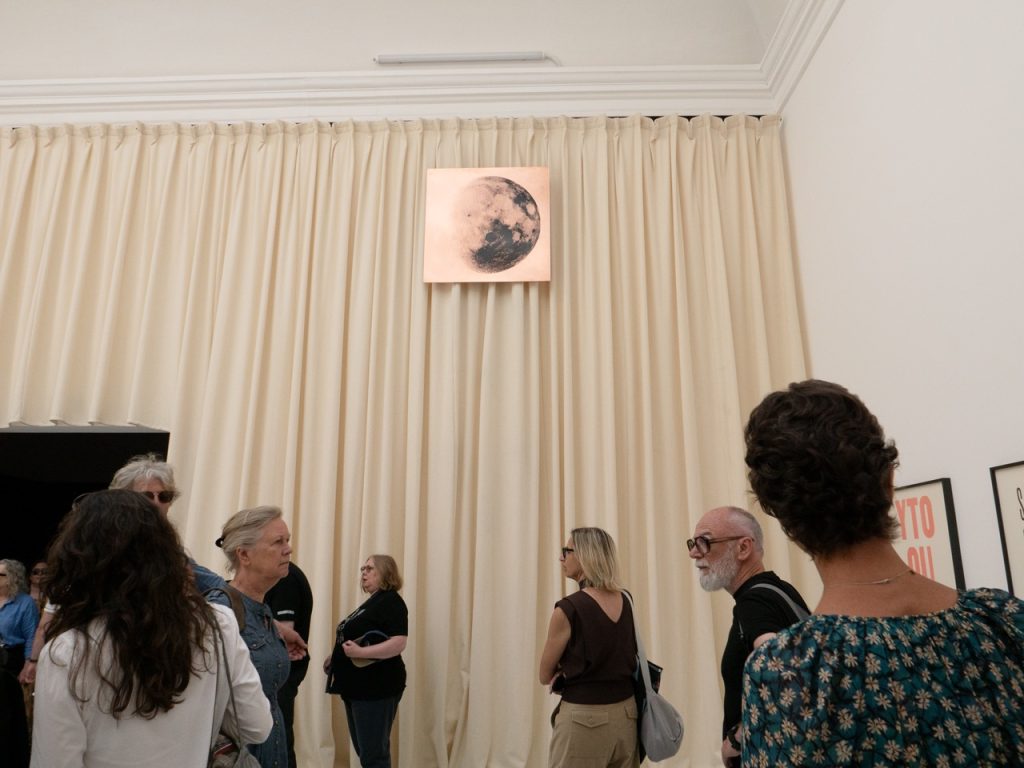
-
- Venice Biennale Photographed by Jenny Sharaf
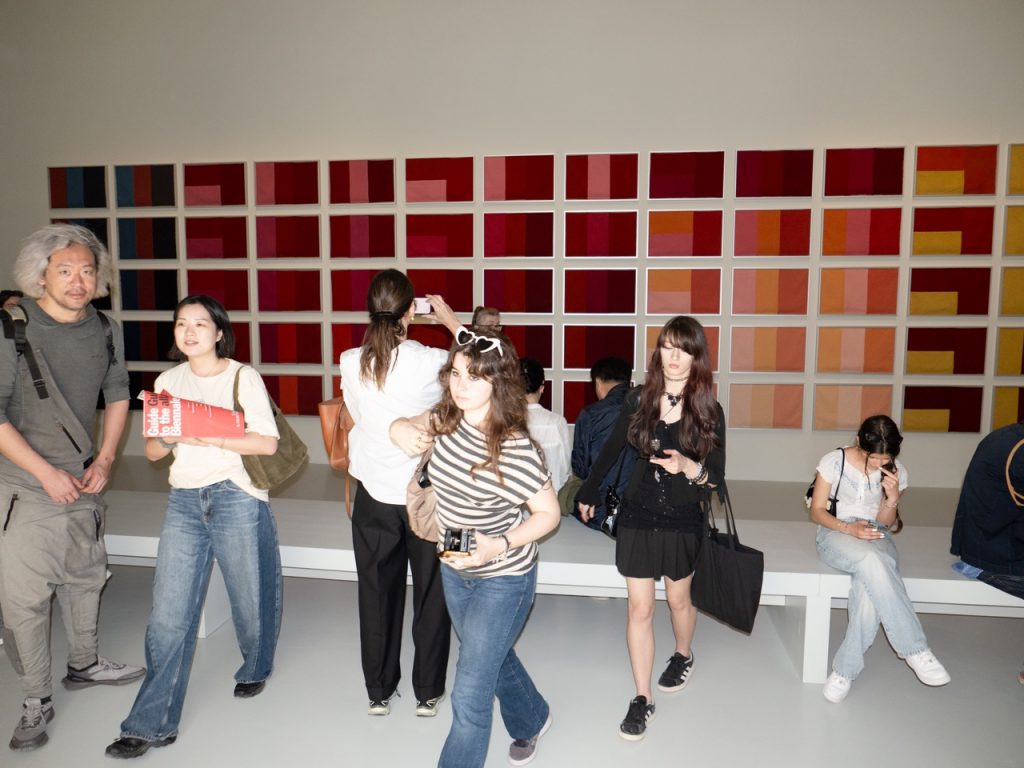
France Pavillion
-
- Venice Biennale Photographed by Jenny Sharaf
-
- Venice Biennale Photographed by Jenny Sharaf
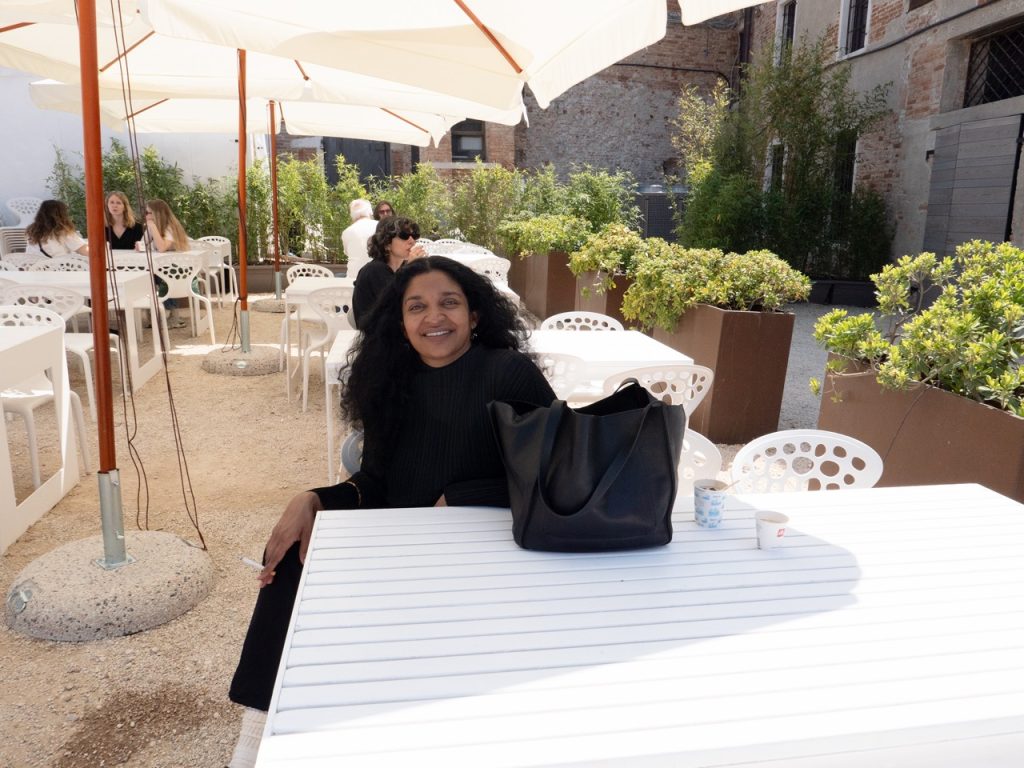
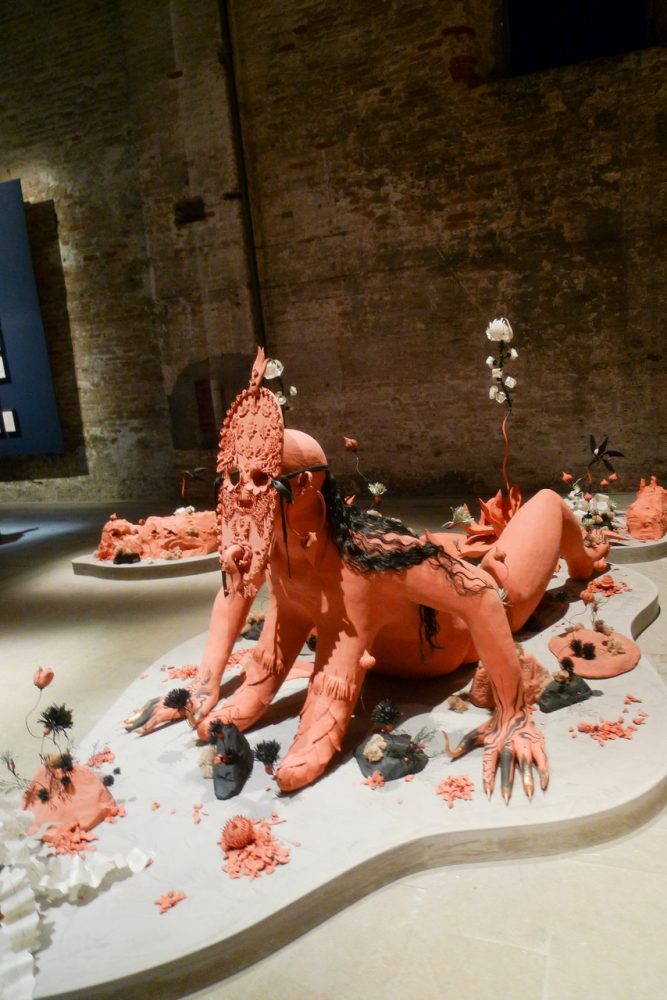
Exhibiting artist, Rajni Pereira, “off-duty” at the Arsenale. She was presenting a wonderful sculpture, with her collaborator Marigold Santos. The installation was composed of clay, flowers, pearls, moss and hair.
-

- Venice Biennale Photographed by Jenny Sharaf
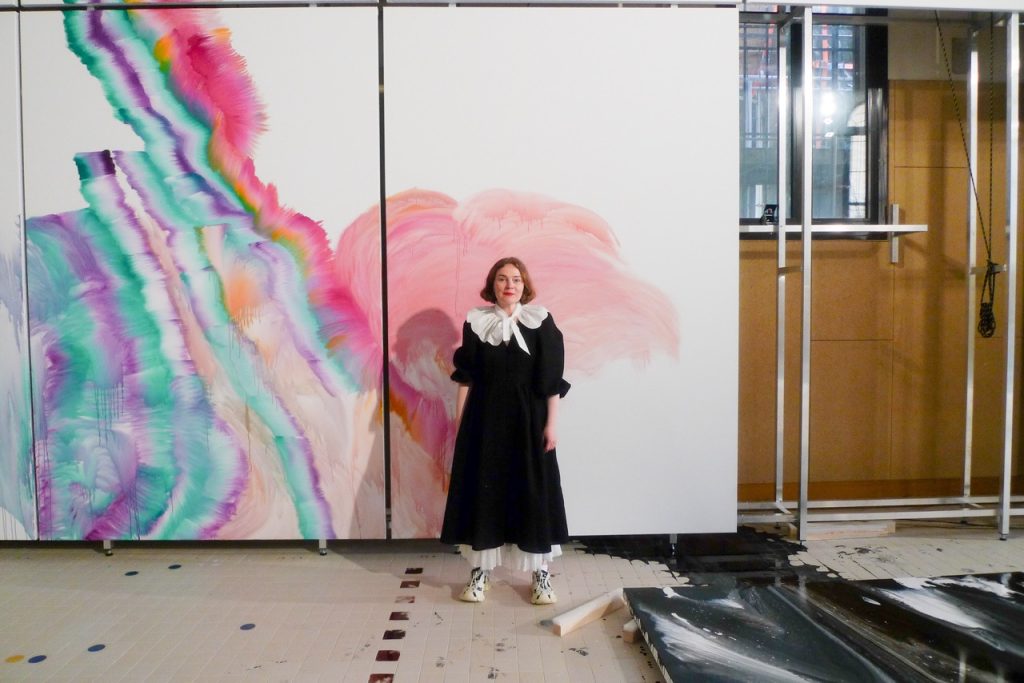
Estonian Pavilion artist, Merika Estna. Curated by Natalia Sielewicz. Merging traditional painting with performance art, all while wearing a fabulous outfit. I cannot imagine this exhibition upset anyone. The artist seemed happy and grateful to be there, which was genuinely refreshing.
-
- Venice Biennale Photographed by Jenny Sharaf
-
- Venice Biennale Photographed by Jenny Sharaf
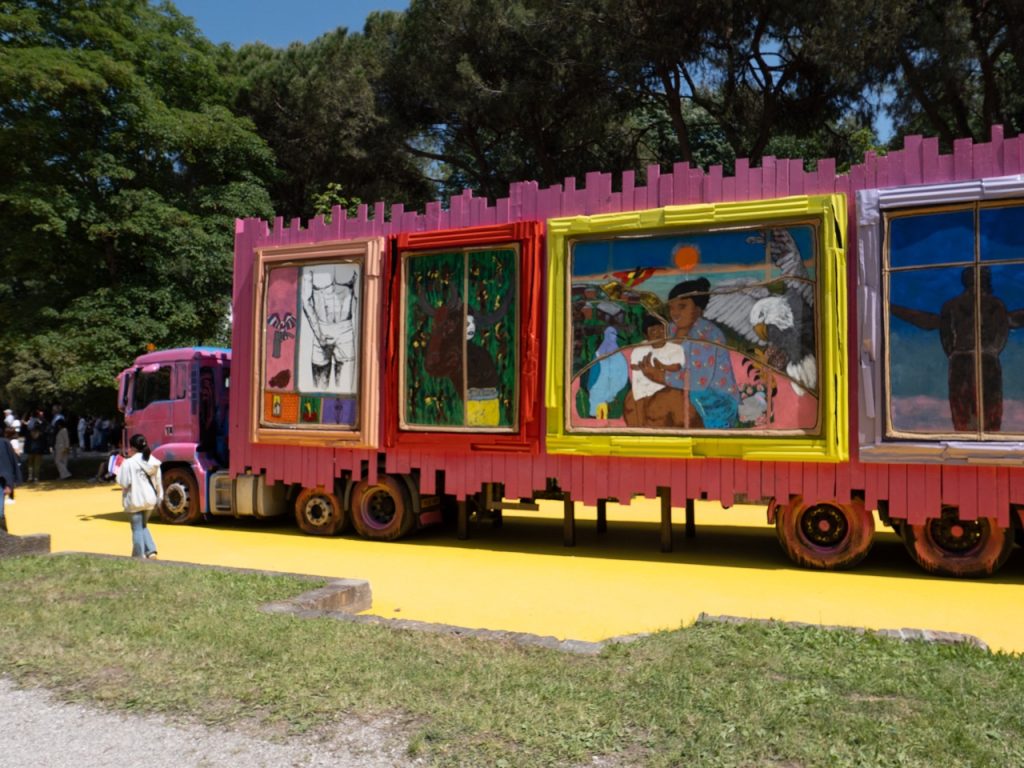
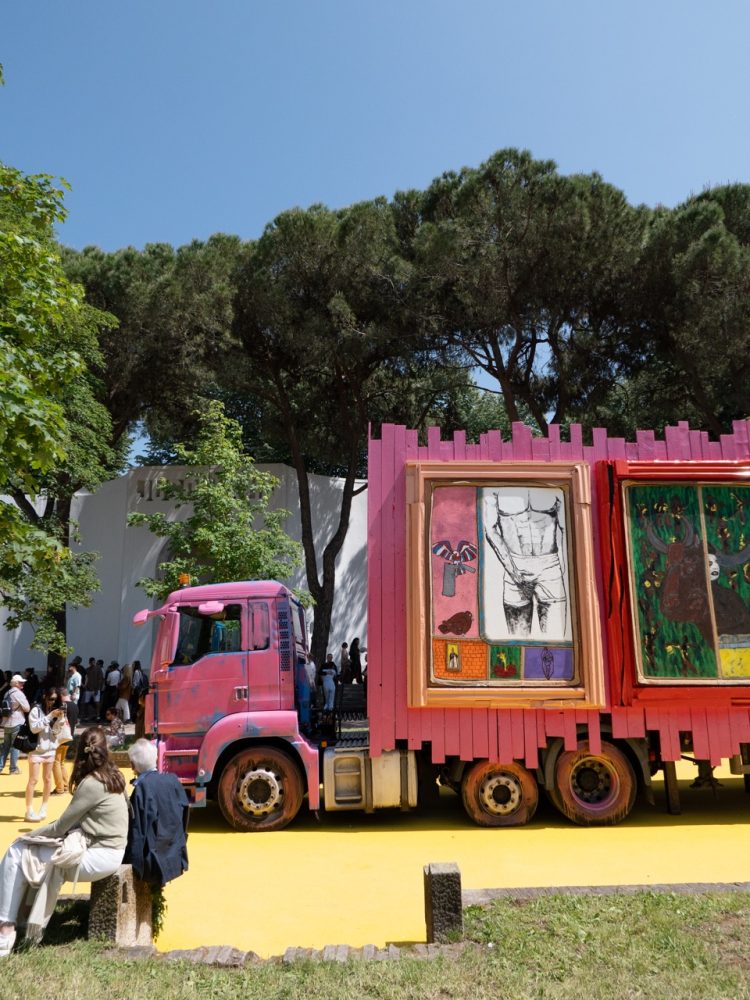
Labor Day Parade ’91 (2026), a large-scale installation by Alvaro Barrington presented in the Giardini during the 61st Venice Biennale. The vividly painted freight truck — driven from London to Venice by the artist himself — combines autobiographical imagery, references to Caribbean and European histories, and art historical motifs into a moving monument to migration, labor, and cultural memory.
-
- Venice Biennale Photographed by Jenny Sharaf
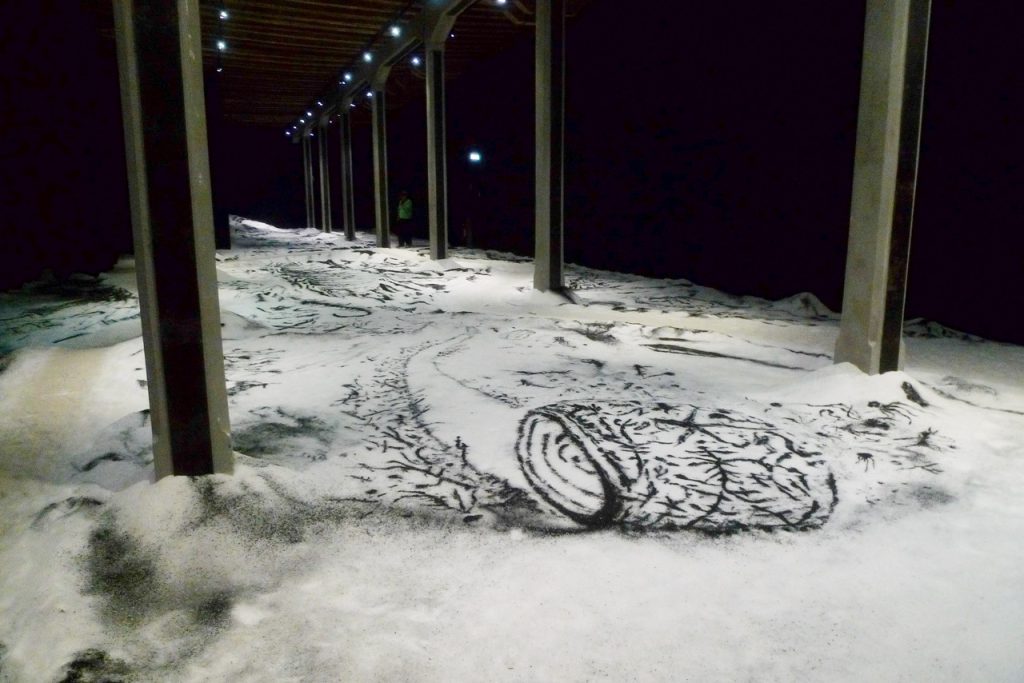
Argentinian artist Matías Duville transforms the pavilion into a haunting, erosion-like landscape composed of charcoal and salt — materials associated with combustion, decay, and geological time. This installation worked on all levels.
-

- Venice Biennale Photographed by Jenny Sharaf
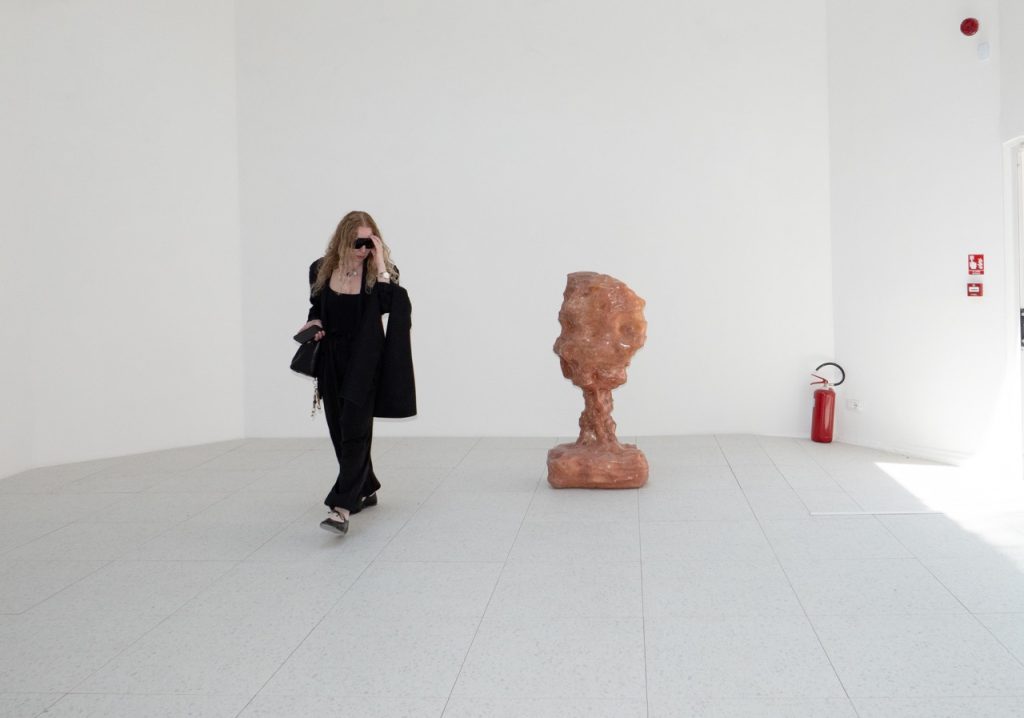
-
- Venice Biennale Photographed by Jenny Sharaf
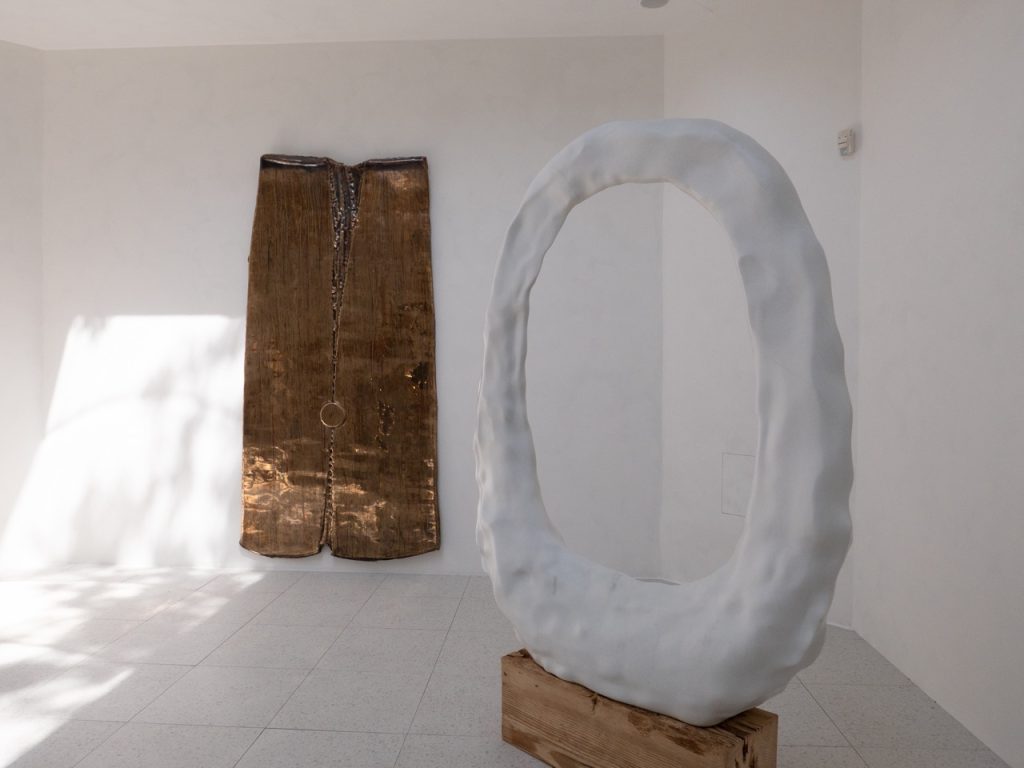
Alma Allen representing the American Pavillion.
-
- Venice Biennale Photographed by Jenny Sharaf
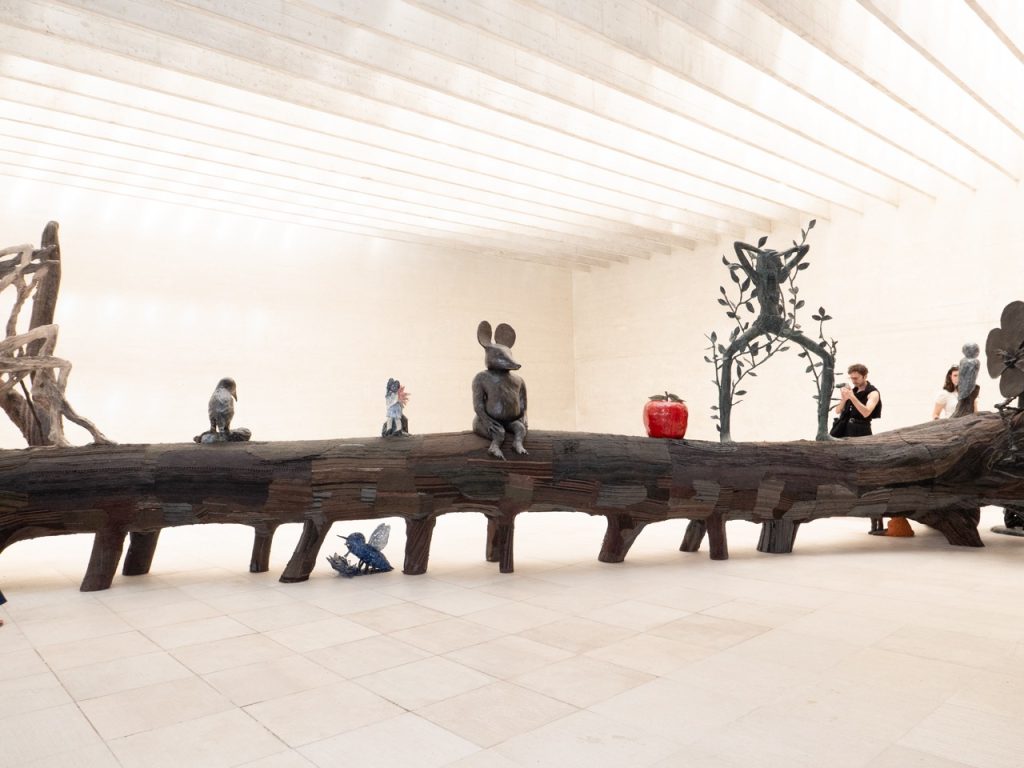
The Nordic Countries Pavilion, curated by Anna Mustonen, brings together artists Klara Kristalova, Benjamin Orlow, and Tori Wrånes in a sprawling, mythic installation that moves between sculpture, sound, and performance. Titled How Many Angels Can Dance on the Head of a Pin?, the exhibition transforms Sverre Fehn’s iconic pavilion into an immersive landscape shaped by Nordic folklore, ecological anxiety, and ideas of transformation. It also felt more like a traditional museum or gallery than other pavilions. Objects felt relatable and maybe even, available for purchase.
-
- Venice Biennale Photographed by Jenny Sharaf
-
- Venice Biennale Photographed by Jenny Sharaf
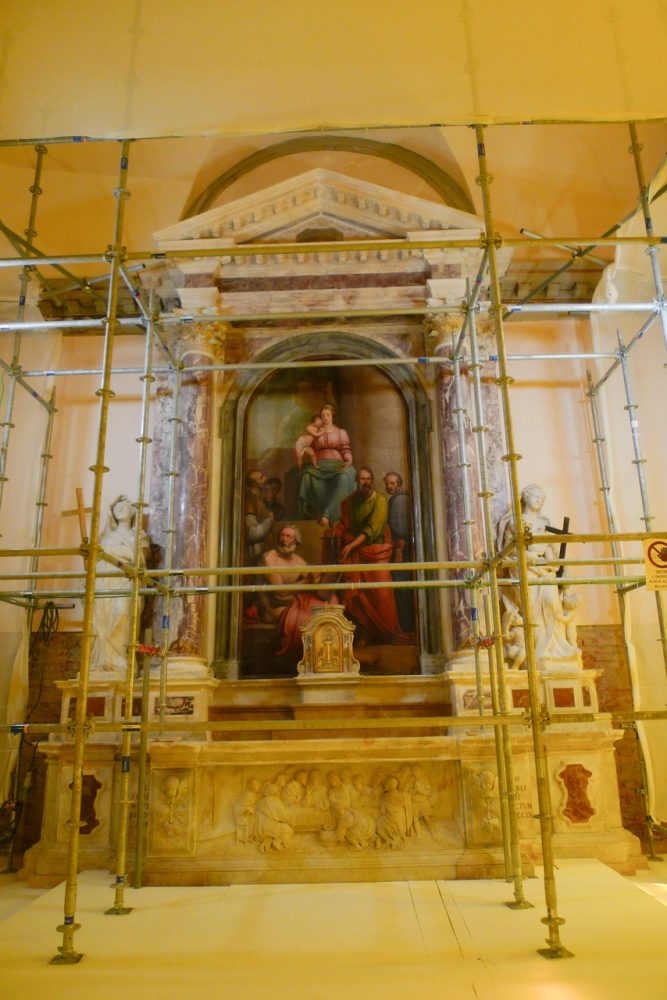
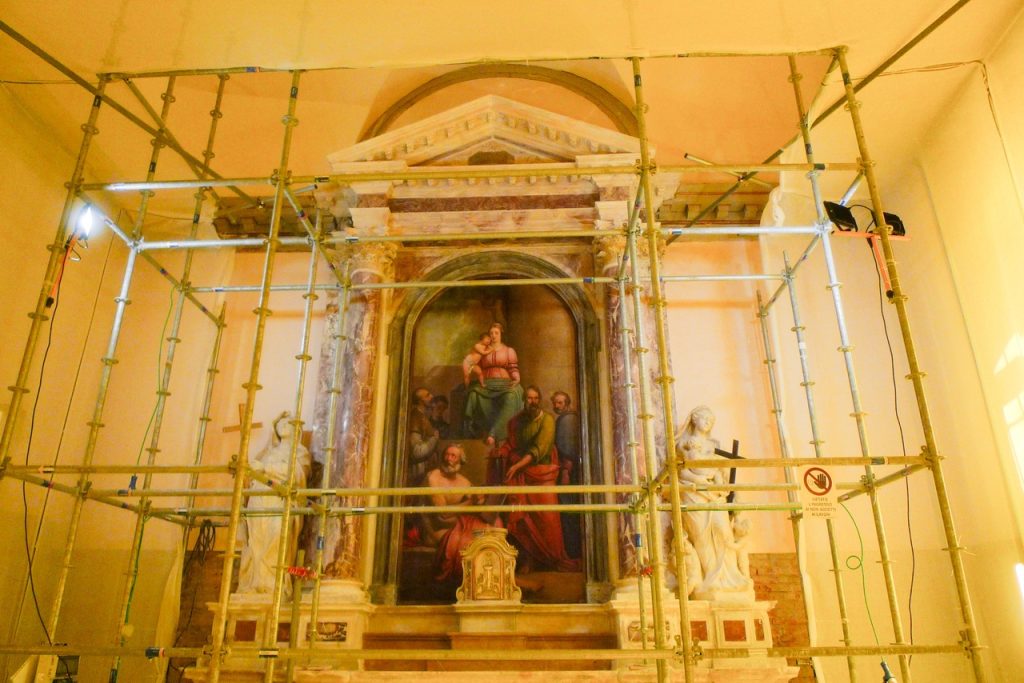
Patti Smith, alongside Soundwalk Collective, unveiled Sonic Prayer on Friday afternoon inside the Church of Santa Maria di Nazaret. The work draws from the legacy of Hildegard of Bingen — the medieval visionary whose ideas around sound, spirituality, and transcendence shape the exhibition’s underlying atmosphere and conceptual framework.
-
- Venice Biennale Photographed by Jenny Sharaf
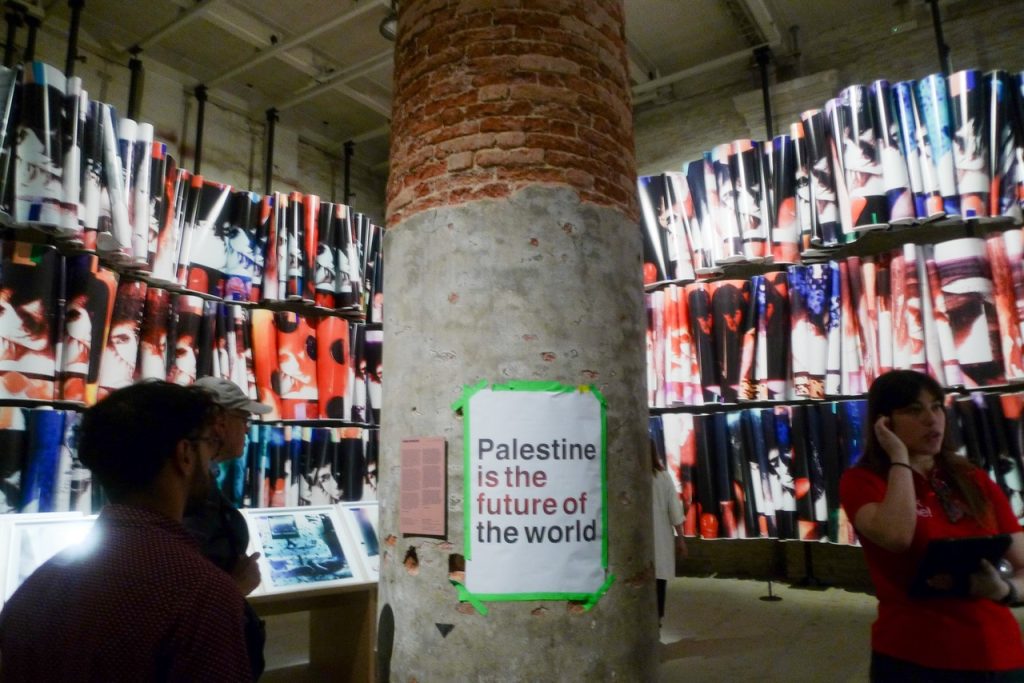
The poster phrase “Palestine is the future of the world” is drawn from a work by Alfredo Jaar, whose politically engaged practice frequently addresses state violence, displacement, and the ethics of representation. The slogan appeared throughout the 61st Venice Biennale during a series of artist-led solidarity actions and protests connected to Gaza and broader debates around cultural institutions and political accountability.
-

- Venice Biennale Photographed by Jenny Sharaf
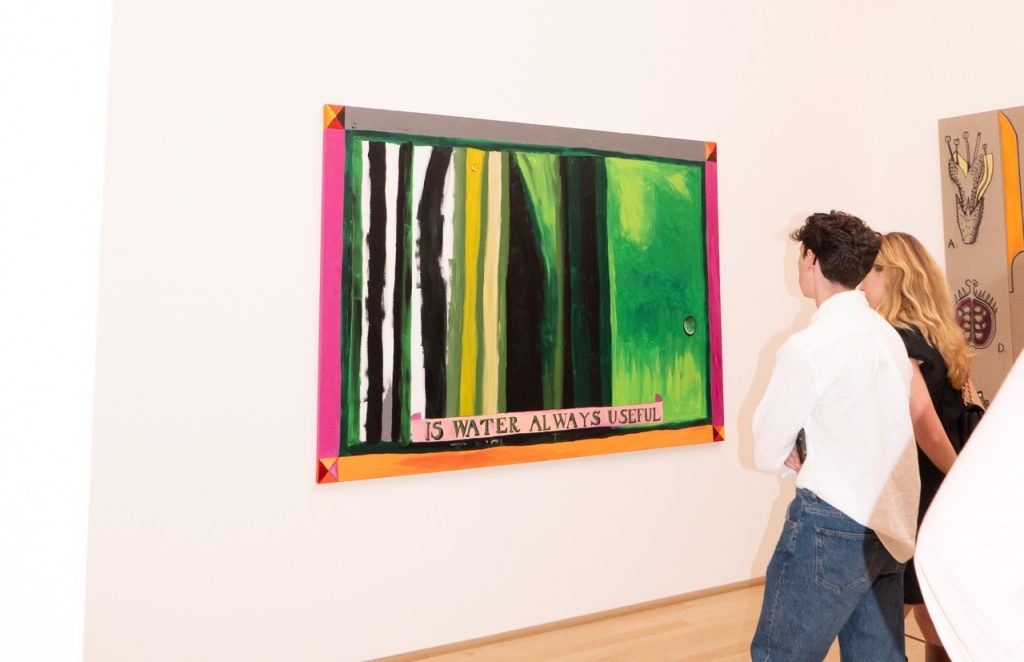
This work is by Brazilian artist Antonio Obá, whose paintings and installations at the 61st Venice Biennale explore spirituality, Afro-Brazilian identity, memory, and symbolic transformation. Combining abstraction, devotional imagery, and text, the work reflects Obá’s ongoing interest in ritual, survival, and the body as a site of both historical violence and renewal.
-
- Venice Biennale Photographed by Jenny Sharaf
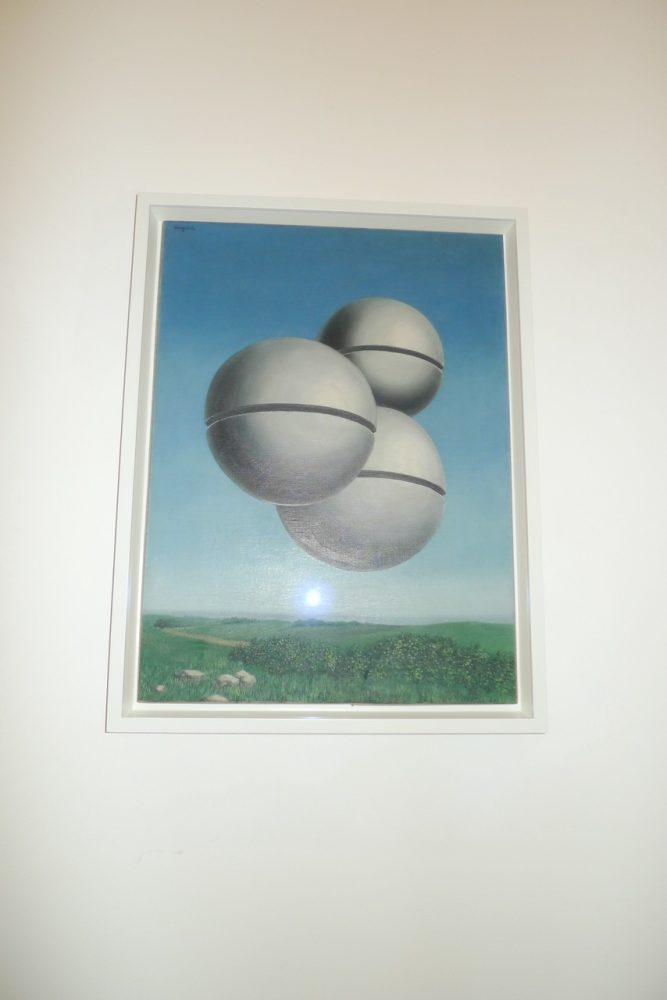
My favorite Magritte painting at the Peggy Guggenheim Collection. Feels like visiting an old friend.
-
- Venice Biennale Photographed by Jenny Sharaf
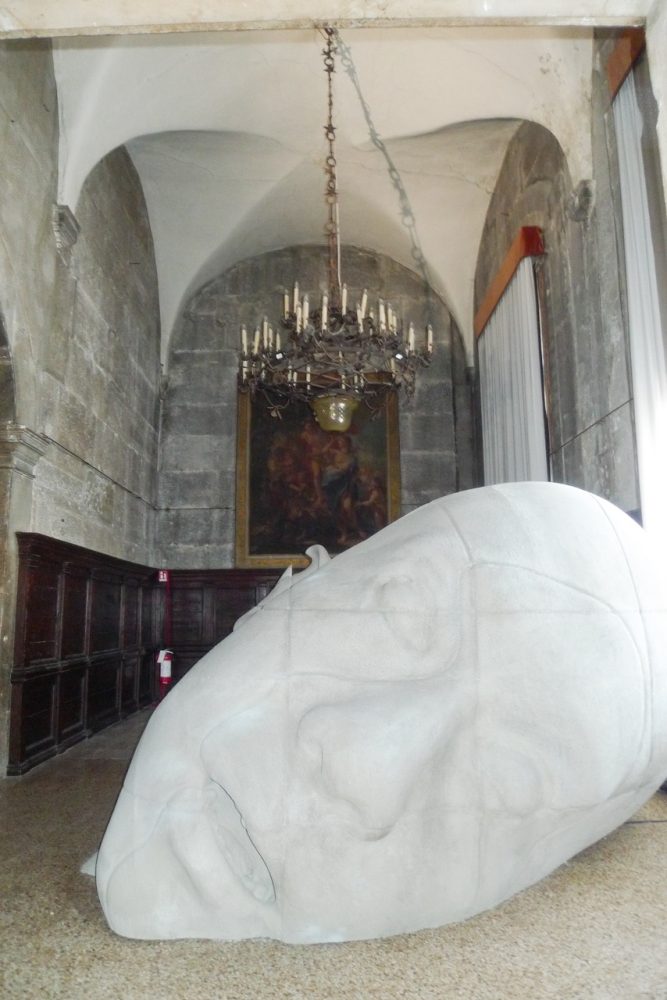
Part of the Screen Melancholy: Li Yi-Fan,at the Taiwan Pavilion. One of the absolute best exhibitions of the week. Haunting, strange, immediate. Curated by Raphael Fonseca. I encourage to look up and watch the videos that were on display, which will stay on your mind for a lifetime.
-
- Venice Biennale Photographed by Jenny Sharaf
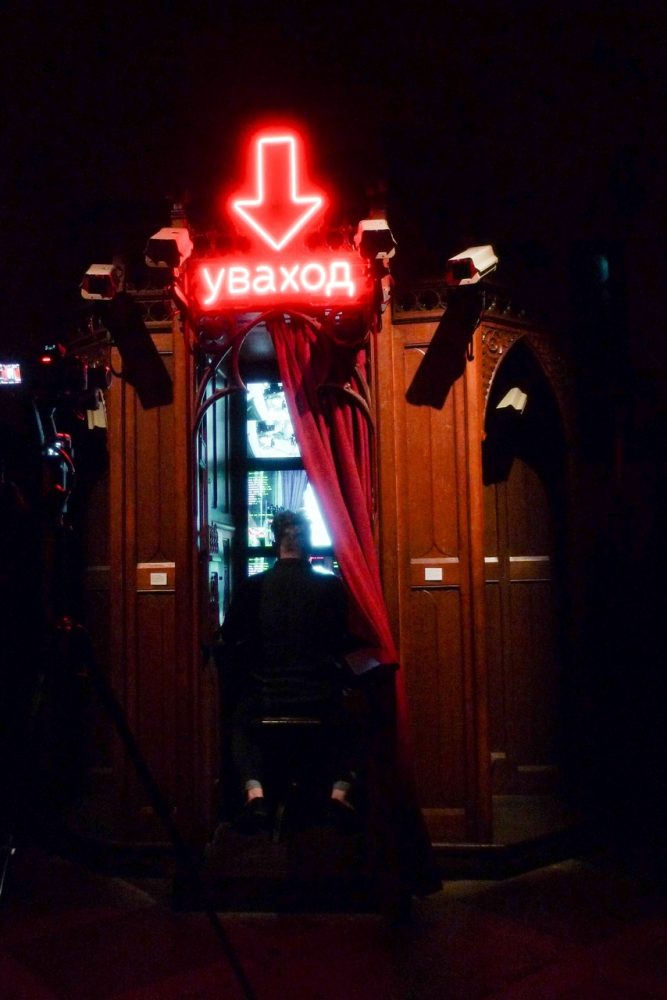
“Official. Unofficial. Belarus” is located at the Chiesa di San Giovanni Evangelista. Though not an official Ukrainian national pavilion, the project — produced by Belarus Free Theatre — traces a shared language of resistance across Belarus, Ukraine, and broader Europe, examining how artistic expression persists under systems of political repression.
-
- Venice Biennale Photographed by Jenny Sharaf