

Dead City Punx Take Back LA
-

- Still from Punx: The Art of Dead City and Friends.
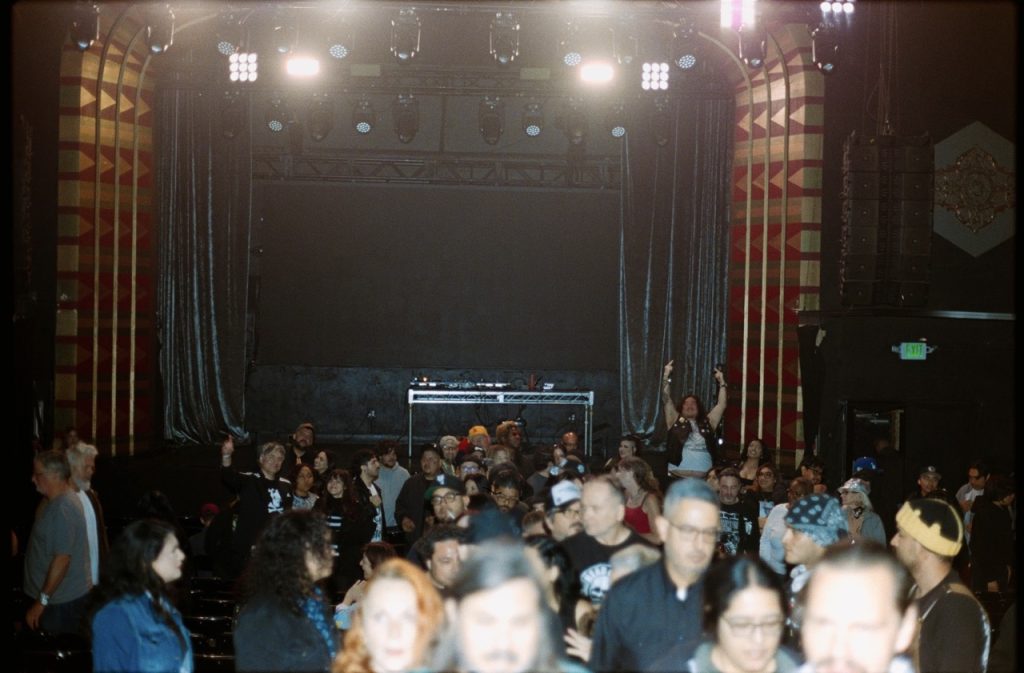
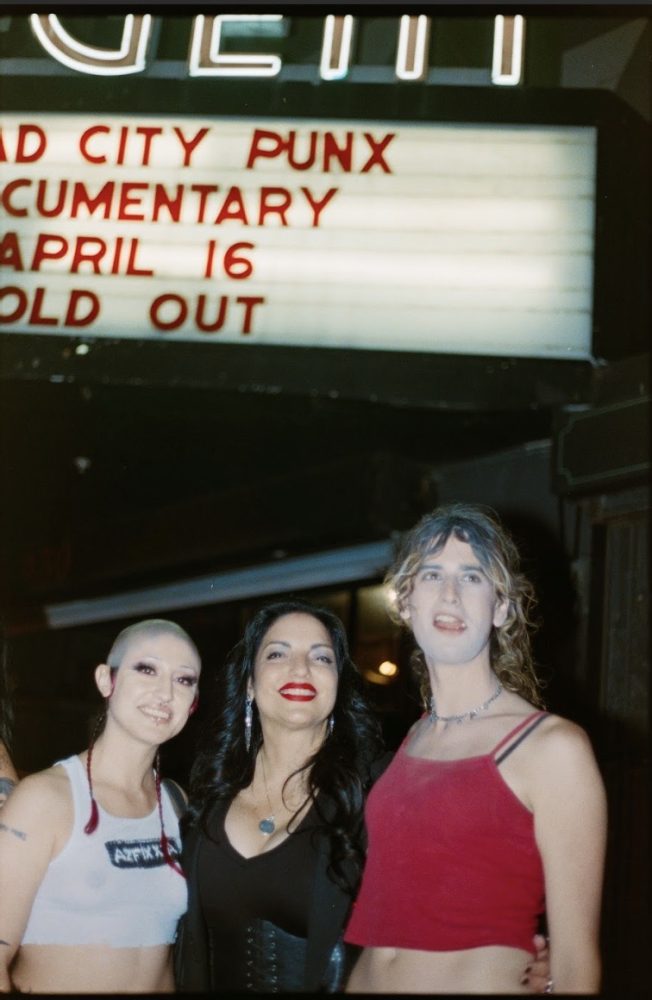
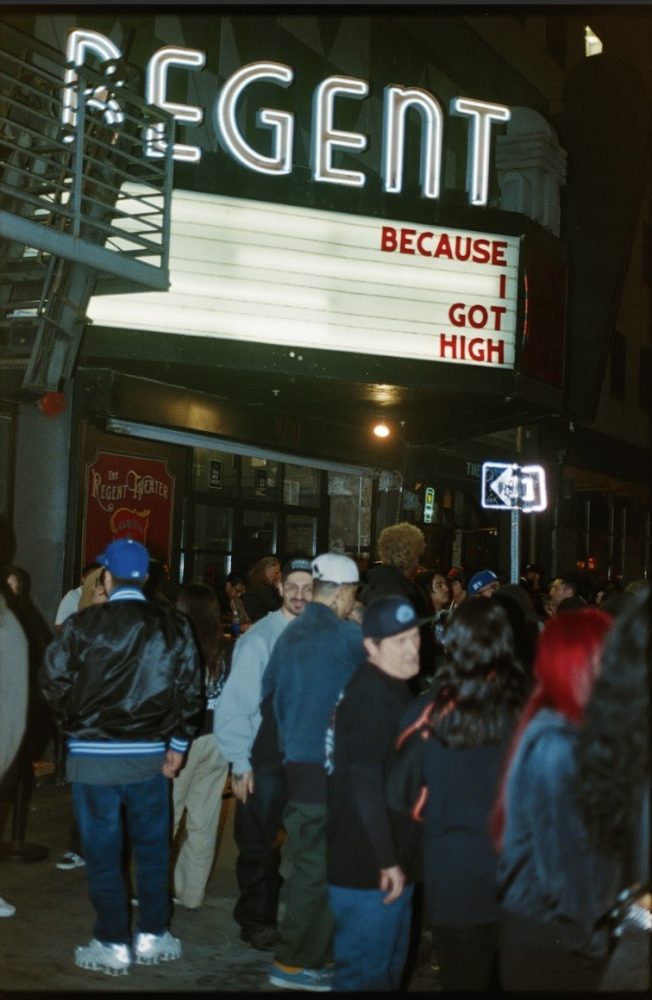
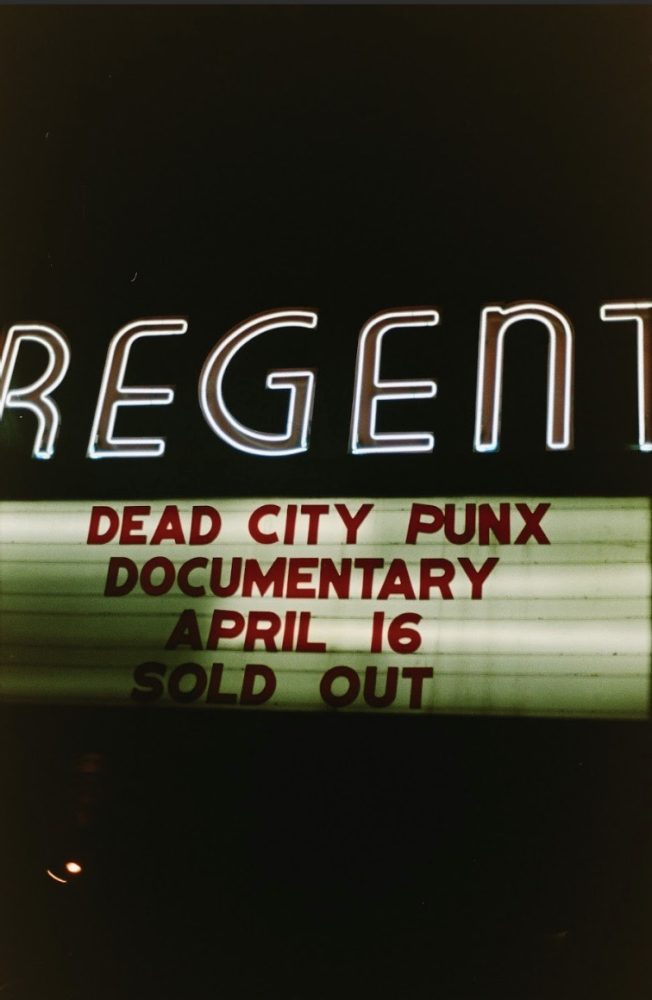
On April 16th, The Regent Theater hosted Dead City Punx and its dedicated fans for the premiere of their eponymous documentary, set for an encore screening at Brain Dead on April 30th. The doc, presented by Beyond the Streets and produced by Rage Against the Machine’s Zack de la Rocha, boasts Sundance and Cannes rejections on its promotional poster, a paradox endemic to Dead City Punx’s impact. As their influence grows, where do their anti-capitalist, lawless tenets follow? The documentary and its accompanying photo book, along with the gallery Punx: The Art of Dead City and Friends (running until May 30th at Beyond the Streets), elevate the band from anarchist DIY degenerates to legitimized artists, recognized by the public for their craft rather than their mayhem. This latent appreciation comes hard-earned, considering the band’s mutual roots on Skid Row.
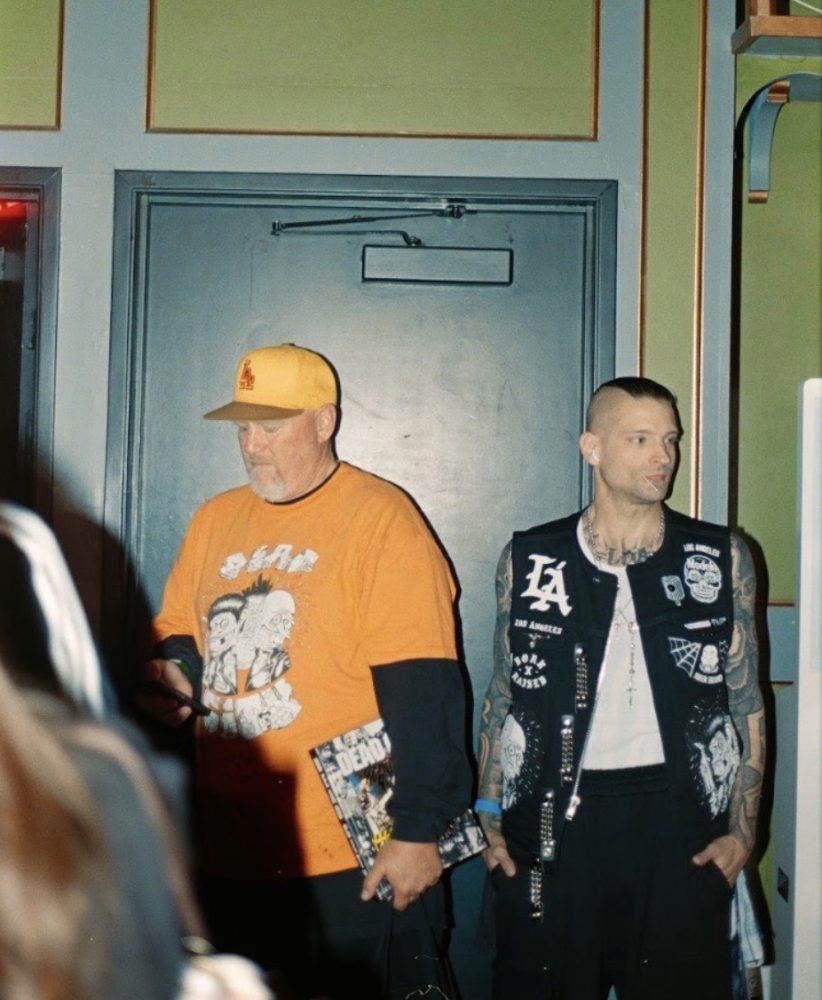
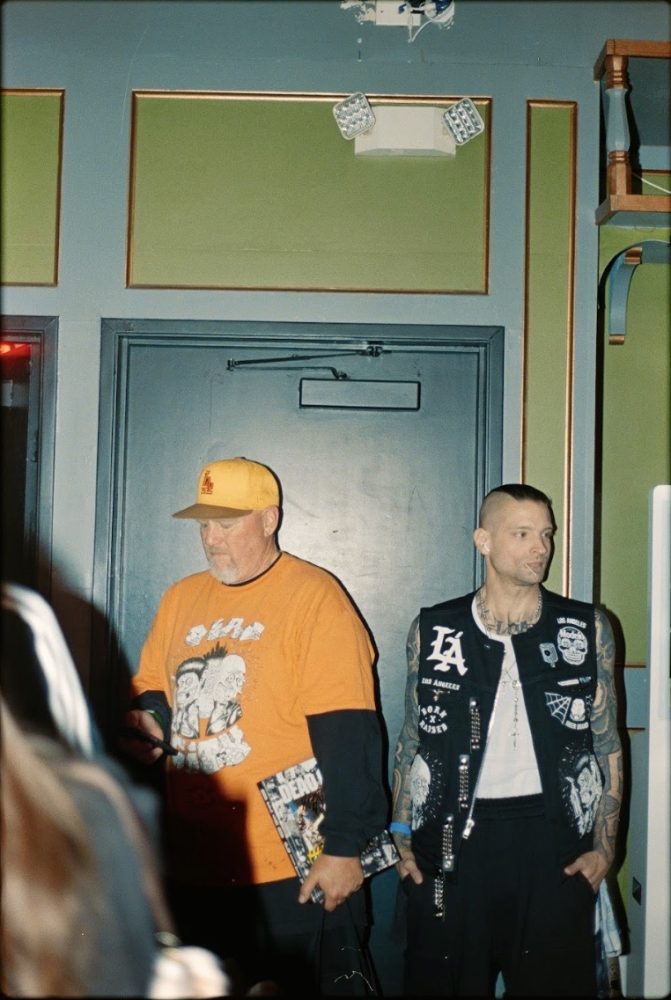
The band’s four members: drummer Grumpy, guitarist Meka, bassist Adrian, and lead vocalist Mike sought escape from Los Angeles’ harshest realities— addiction, homelessness, and incarceration, all struggles tying the Punx to one another. Together, they discovered music as a means to release them from these systemic strongholds, a rope which they could climb out of the depths of their strife, holding out a hand to others as they reached the crest. Nearly a decade and a couple dozen shows later, Dead City Punx have cemented themselves as both Los Angeles establishment’s greatest enemy (denounced by the LAFD, LAPD, and Mayor Karen Bass— all of whom were heartily boo’d by audiences when gracing the screen at the April 16th showing) and heroes of the marginalized.
-

- Still from Punx: The Art of Dead City and Friends.
-
- Still from Punx: The Art of Dead City and Friends.
-
- Still from Punx: The Art of Dead City and Friends.
Grumpy says of the catharsis a Dead City show provides, ‘A lot of people work their regular job, they hate their life. But they could go to our shows, and they could become this character, and a lot of people leaned into it.’ Though, this arena is far from a safe space. Shows are guerilla-style, constructed from shoplifted chainlink and church-nabbed sound equipment. Often in the worst part of town, to ensure the unlikeliness of police intervention, the street kids in attendance are free to ignite a bacchanal of illegal indulgences. Alongside band members and admirers, the documentary features a Dead City fan, who casually opens his confessional. ‘Hi! I’m —- , and I got blown up at a Dead City concert.’ What follows is footage of the wreckage that can be expected from one of these underground affairs— car smashing, fireworks, massive mosh pits— inclusive of the bonfire-turned-spray-paint bomb that exploded the featured fan. Burned from head to toe, he responds with pride when asked if he stopped going to Dead City shows after the incident. ‘Do I stop skateboarding because I got hurt? This is my Dead City souvenir.’ To the community, danger is a fleeting side effect of punk. In the documentary, Mek continues, “We can’t control what that person does. We’re just here to play music, and if you want to react to it by setting a stolen car on fire, that’s your choice.”
-

- Still from Punx: The Art of Dead City and Friends.
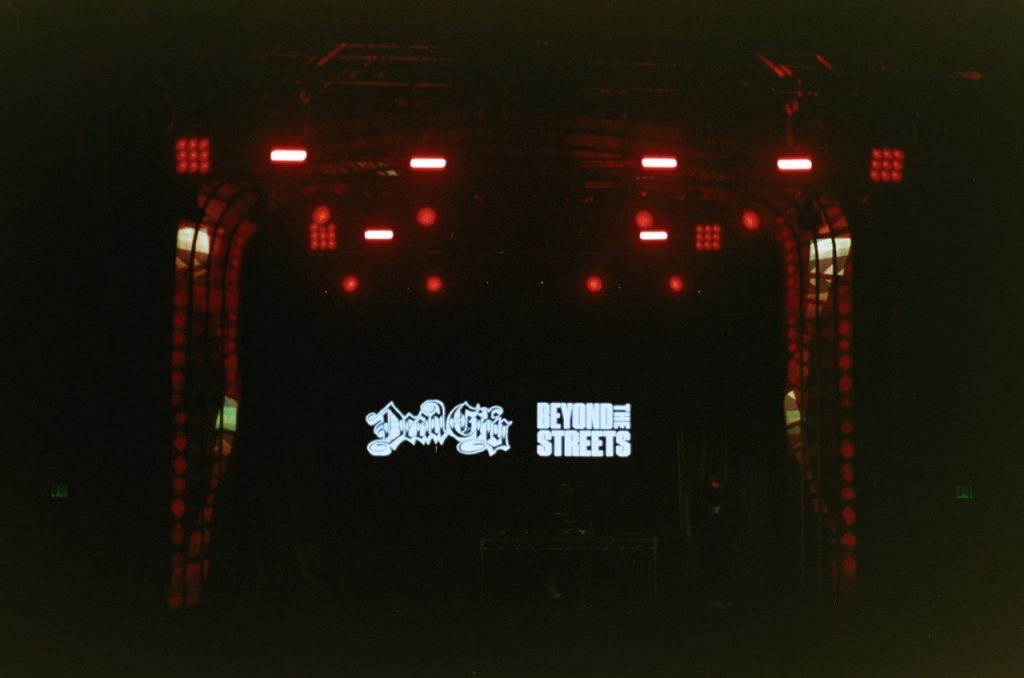
The real risk is run as the Punx rise the ranks of the industry, a word in and of itself antithetical to their practice. The Dead City documentary premiering at the Regent is especially significant in the Punx’s history, as it is where they took the leap from under-the-bridge performances to aboveground venues (a particularly perilous prospect for anyone deigning to host the crowd). When Dead City announced they would be taking shows indoors, under a Ticketmaster-run venue no less, band members were concerned with how fans would respond. Social media and the analog posted flier outreach always acted as their networking, since they may be hours from a promised show without a built stage or a secure, cop-less location. An official, ticketed concert was a jolt to the scene. Levying their success and ability to bolster community against their anti-capitalist moral code has been a tough balance to strike. Yet, Dead City’s unwavering commitment to praxis— whether or not that’s what they’d dub their efforts— keeps audiences trusting of the band’s message.
Resistance is embedded in Dead City’s discography and public performance, emphasized through their COVID-era renaissance and recent involvement in ICE Out campaigning. The band singlehandedly revived Los Angeles’ severely lagging underground scene amidst Black Lives Matter protests and systematic failure in handling the pandemic. ‘Everyone had that animosity and riot energy,’ remarks Grumpy of their 2020 shows, which offered a much-needed thread of hope for punks. Survival is a constant concern on the fringes of Los Angeles, or any city nationwide. At a Dead City concert, a space is created demanding the space for those same outcasts to simply live. This ethos extends Dead City’s swelling influence to defend the communities that have enveloped the members in acceptance for decades.
-

- Still from Punx: The Art of Dead City and Friends.
-
- Still from Punx: The Art of Dead City and Friends.
-
- Still from Punx: The Art of Dead City and Friends.
In addition to exclusive interviews with Grumpy, Adrian, Mike, and Meka, the documentary intermixes amateur videography of the group’s concert scenes— an amalgam of phone recordings and police footage. The Punx refer to KTLA’s coverage of a particularly raucous warehouse party as ‘the best press they could get.’ But, their music, the substance Dead City, gave platform to the artistry of a society of taggers, photographers, filmmakers, and visual artists, a body of work now chronicled in Punx: The Art of Dead City and Friends. It’s only fitting this acclaim for the band and their comrades is most welcomed into culture at the bubbling over of governmental mistrust and social decline. Beyond the punk scene, Dead City permisses all audiences to defy the system, scream louder, and command change.
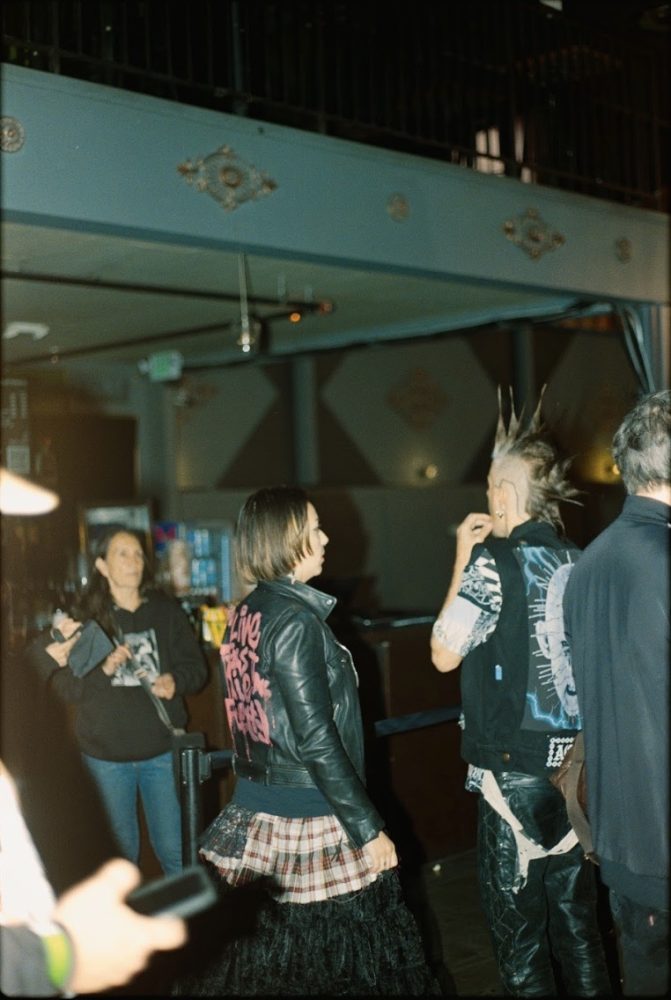
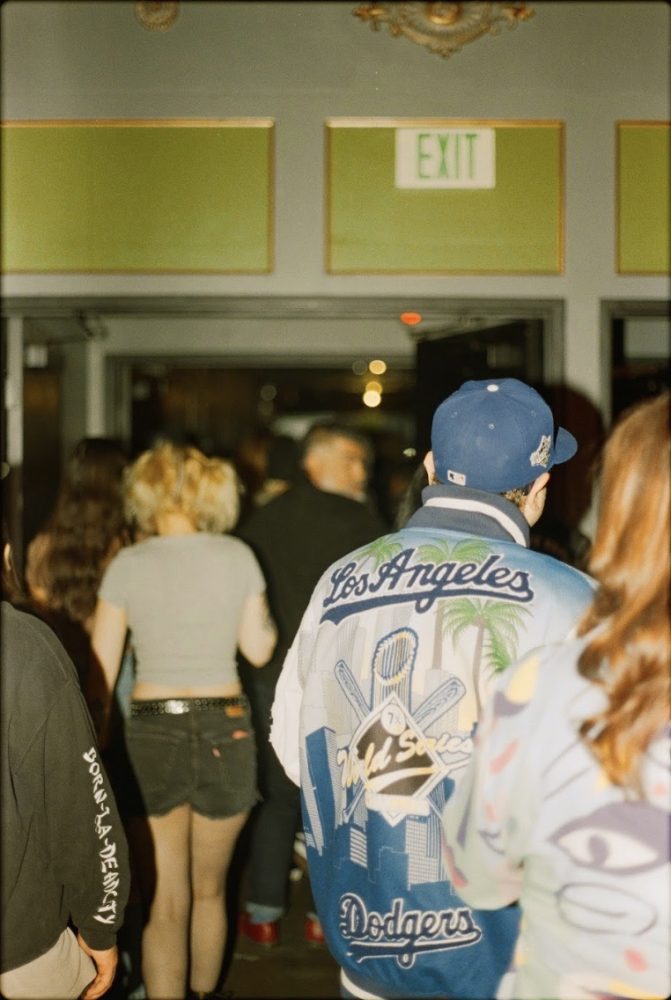
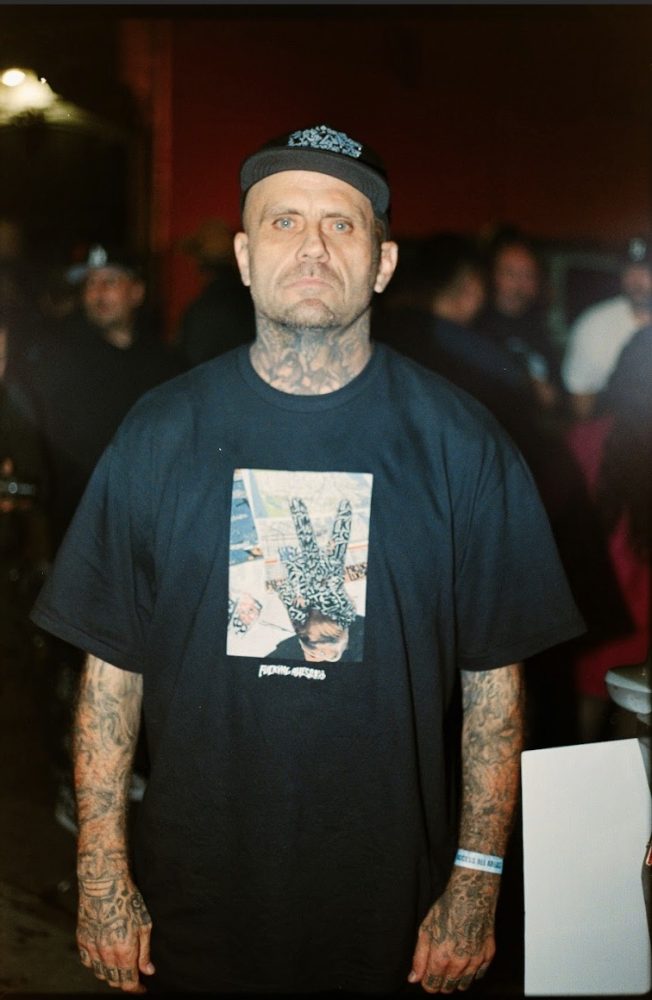
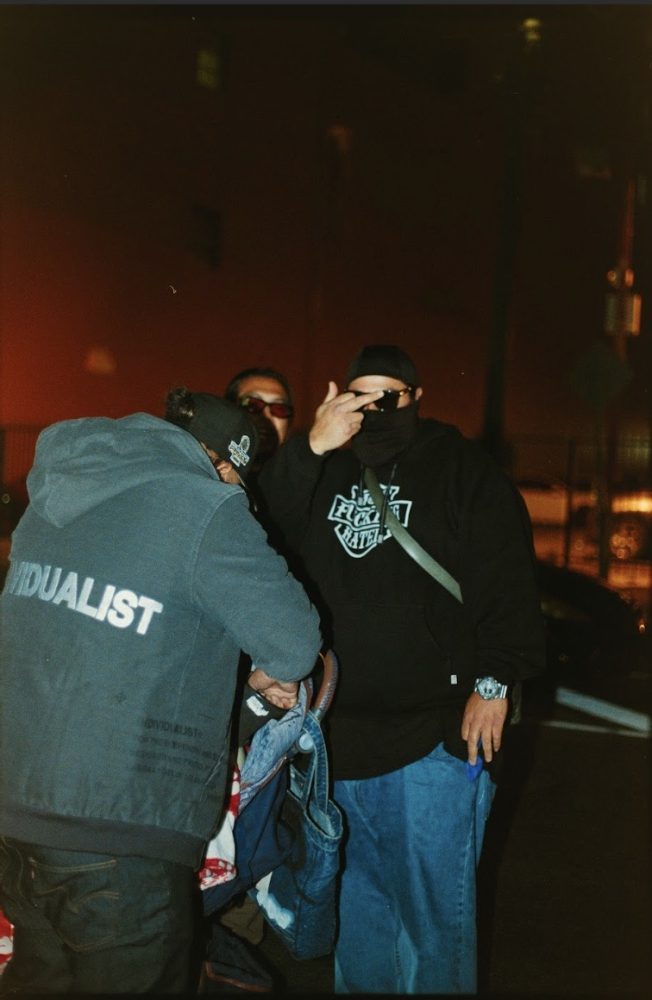
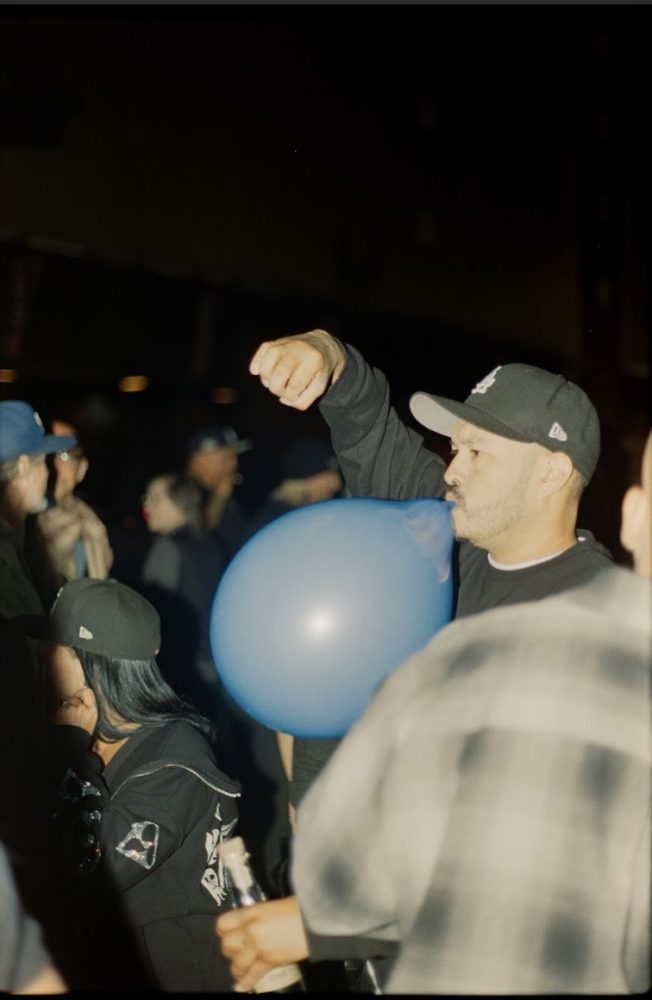
Post–screening, the crowd seeped onto the boulevard outside the Regent, in typical Dead City fashion. Though no bonfires had yet been lit, the trappings of a Dead City affair were palpably present— balloons were huffed, middle fingers thrown in rebellion to camera flashes. Except, this time, everyone was in their best shoes and on their best behavior (and, there was a merch table trailed by a mile long line). It was an evening of punk in its highest artform, or perhaps just its most contained. Some on the scene may have considered it a dud in comparison to the usual riot, but the convivial buzz among fans and family members in the throng made it clear that this was an overdue nod to the revolutionaries we all rallied to honor.
-
- Still from Punx: The Art of Dead City and Friends.
-
- Still from Punx: The Art of Dead City and Friends.
-
- Still from Punx: The Art of Dead City and Friends.