


In Conversation With: Peter Jensen
Legendary fashion designer Peter Jensen is only just beginning.

Peter Jensen by Lasse Bak Mejlvang
After a prolific Central Saint Martins education, your career focus shifted from menswear to womenswear. How did your academic exploration of design shape what we would soon see on runways?
I studied under Louise Wilson, doing menswear as my pathway. I was in a very fortunate situation to have an Italian back which chose ten students to do a collection with, and build a brand with. They picked me. I didn’t expect that at all. I was menswear, whereas everyone else was womenswear. Womenswear was much more en vogue. I wasn’t even finished at Saint Martins before I fly to Italy to start my first collection. It went so quickly. That’s how I professionally got into the fashion industry. It continued from that. I worked with Il Bocchi and his partners for three seasons, then broke my contract after 3 seasons and went off to do my own collection.
I was very interested in menswear. One had to remember, menswear wasn’t something the media was focused on. It wasn’t the thing to do. Raf Simons at that point had put out a few collections. I was fascinated. I didn’t have big plans to do womenswear, but I did so because after my three seasons in Italy, I needed something that would refresh my brand. The first collection I did, Mary Mills Minter, was shown at London Fashion Week. It was upcycled— everything was sustainable, made from vintage garments. My friend, the photographer Tim Walker, came to see the collection. He took it with him, and photographed it for Italian Vogue. That’s when I began to think, ‘There may be something here.’ I did a small presentation in a derelict nightclub. The next day, I got a phone call from Barney’s. They wanted to buy the collection! It’s a really lucky coincidence that has happened to me in my career. I never sat down and made a business plan. It was very organic.
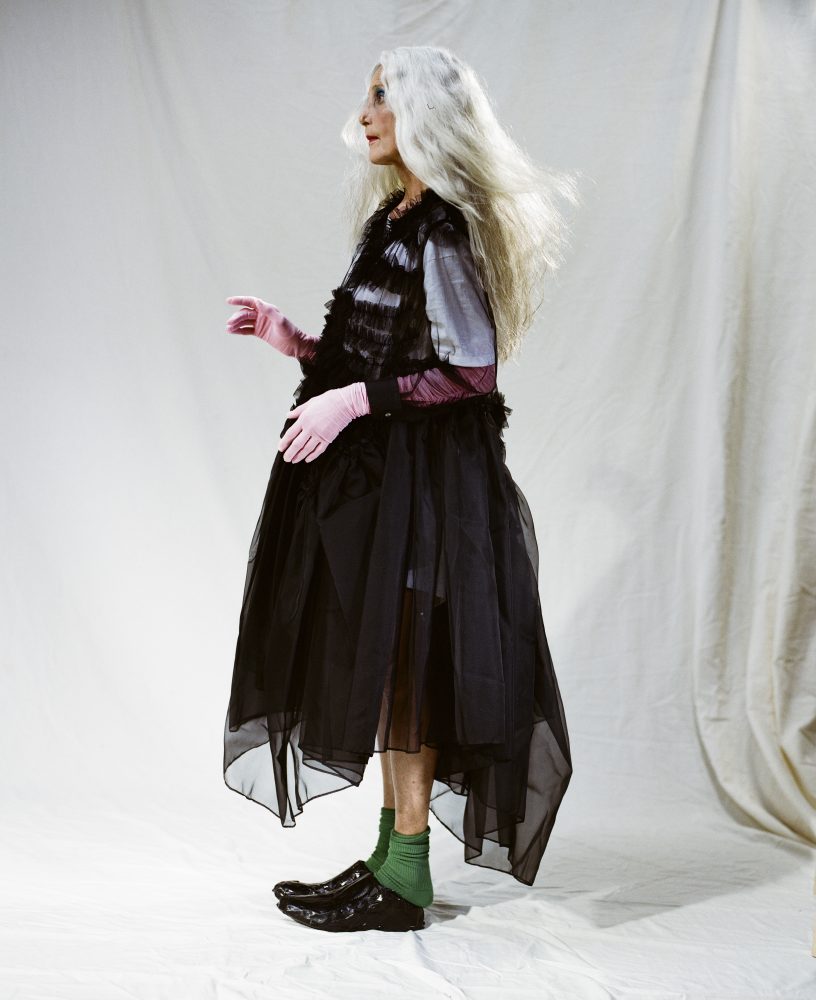
Photo Courtesy of Joelle Grace Taylor
Since your brand’s inception, strong female protagonists have steered your collections’ inspiration, dubbed “The Muses”. Personalities have ranged from Tonya Harding to Laurie Simmons. Where did this concept originate? When did you realize it would become a signature of your garments?
The Muses started at Saint Martins with my degree collection. That collection was named ‘Marianne’ after Marianne Faithfull. I was reading her autobiography at the time I was designing the collection. I found her story intriguing— great fun, and very English. My fascination with women has always been part of my DNA— whether or not it’s jealousy from me for not being a woman, I don’t know. I’ve always found women’s stories more fascinating. Maybe it’s because I’m gay. It came very naturally. Women have always directed the collections organically. First, people found it really weird. They couldn’t get their head around it. I had to explain it over and again. But, then they got really into it. People started sending suggesting. Obviously, I’m not going to use that. It became part of the brand. I don’t think anyone else has done it like that. It can be used as an art project. S/S ‘06 was Sissy Spacek, and she wrote a lovely letter to us, and was really thankful. The same goes for Yoko Ono. It’s really fun to have people notice this homage. S/S ‘08 was Mink Stole, which then was requested by the John Waters Archives in Baltimore, Maryland. Things like this happened alongside the collections. I’m thankful to have that archive in my bag.
You mention John Waters and Mink Stole, noting the relevance they had in your design, and the subsequent relevance of Peter Jensen garments within their universe. The throughline of camp that ties you to these individuals is certainly palpable— is it intentional, or organically occurring?
That was natural. It comes from me being brought up by my grandma. She was very camp— very mean. She was a total John Waters character. ’m so happy camp is coming around again. It’s such a relief that humor and irony is once again being seen as healthy for you. No one is going to kill you over it. Everything had been so fucking serious for the past 5, 6, 7, 8 years. For God’s sake, have some humor!
Your fashion illustrations are to be featured in the upcoming film I Love Boosters. Tell us about how this collaboration came to be.
I Love Boosters came about because my dear friend, Shirley Carotta, was the costume designer for the film. They filmed here in Atlanta. It was an amazing opportunity for the students I teach at SCAD, because they were able to be involved in this process. My illustrations were used as the designs of Demi Moore’s character. I was so chuffed and pleased. Of course, you would be! It’s just good fun.
Your impact on the design world goes far beyond your own atelier. As the chair of the Savannah College of Art & Design’s fashion program, you’re now guiding the next generation of talent in this industry. What inspired this leap into education?
I began as a guest lecturer in 2001, working in the menswear program at Saint Martins. I’d never taught before, but it was much less structured at that time. I was in Louise Wilson’s program, who ran my MA, and was there until she died in 2014. I’ve taught at the Royal Academy in Copenhagen, Udica in Berlin— all sorts of places. I sold my company in 2018 with the intent to take time off. But then, I got an offer from SCAD to be the chair of the fashion program. I’d never been to the South. It was something fun and interesting. I left my company, and two weeks later we were here. I’ve been here ever since. I said to my partner, Dante, this will be a three year thing. Here we are, eight years later. I’ve met so many fabulous people I couldn’t live without. I love the students, their curiosity and their ideology. If I can help to steer their passions, I’m happy to do so. That’s why I’m still here.
Now, you certainly haven’t stopped designing alongside your teachings. Tell us more about your recent project, Yours Truly by Peter Jensen. From what I understand, the label champions sustainability and eco-friendly sourcing while platforming emerging artists.
Yours Truly was me wanting to do something where I could work with other people. I wanted to control when I want to do a project. In 2024, I did a presentation at Copenhagen fashion week where my youngest model was 76. They were fabulous. They danced around in these gowns. Out of that came the MET Gala and the two pieces they bought from that collection. I’m so proud of that.
Due to your teaching career, you have an intimate lens focused on the rising generation of design stars. How does their ethos toward the industry differ from that of thirty years ago?
I think this generation has a higher ambition level for themselves, as well as being more tuned to the culture. They’re also very good at taking feedback. There’s great hope for the next generation. They just need to find their way of doing it. We won’t trot along to the same catwalk show. The opportunities are out there if they want to do something with it. That goes for all sorts of careers. Something new has to happen.
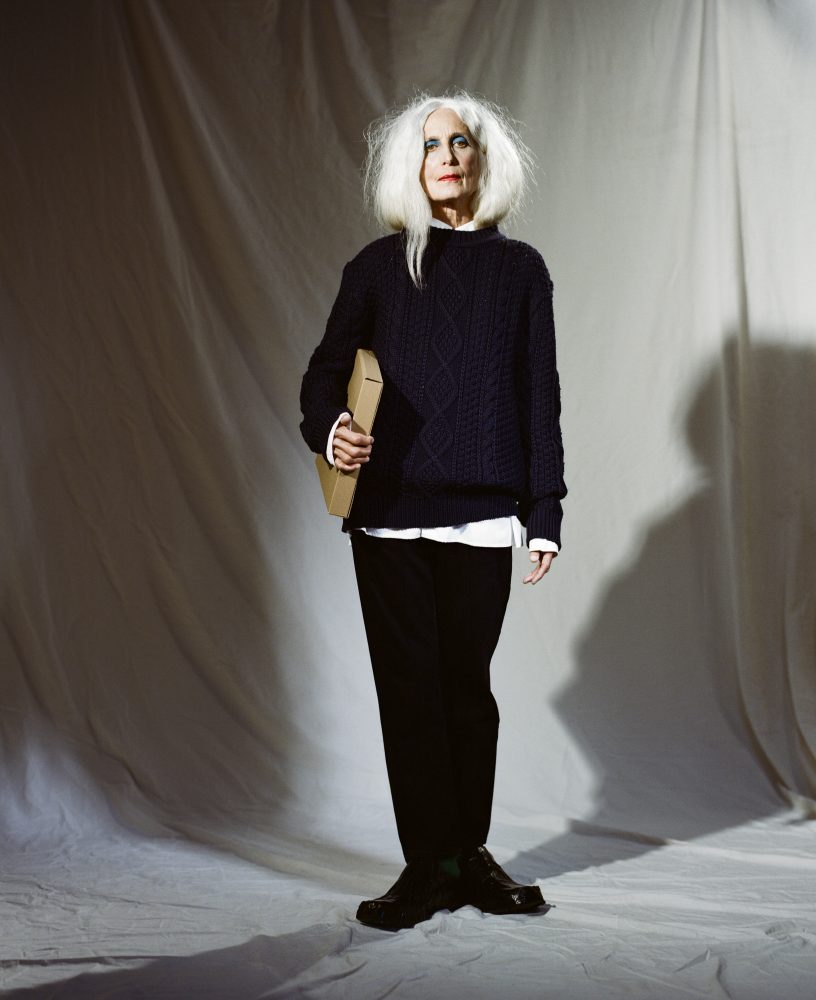
Photo Courtesy of Joelle Grace Taylor